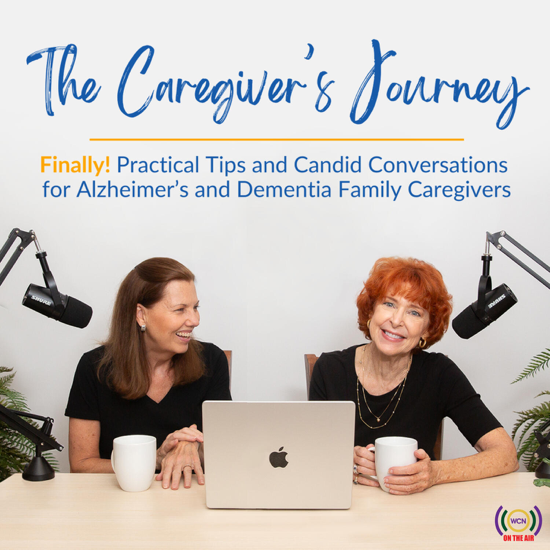
The Caregiver's Journey
The Caregiver’s Journey podcast is an innovative and refreshing way to learn how to tackle day-to-day Alzheimer's and dementia family caregiving challenges with strength, patience, and peace of mind. Using practical tips and candid conversations, Sue Ryan and Nancy Treaster help you navigate caregiving’s ups and downs, so you move from feeling frustrated, overwhelmed, and sometimes frightened - to confident, balanced, and supported.
Subscribe
iTunes / Overcast / RSSWebsite
ArrayEpisodes
Getting the Most Out of Doctor’s Visits: Four Essential Tips / Alzheimer’s and Other Dementias
Do you leave your loved one’s doctor’s appointments feeling intimidated or confused instead of empowered? Do you wish you had a clearer role in shaping their care? Many caregivers feel this way, and there is a better way to approach these visits.
We are Sue Ryan and Nancy Treaster. As caregivers for our loved ones with Alzheimer’s and other types of dementia, we know how much rides on every doctor’s visit and how easy it is to walk out feeling unheard. We’re sharing insights about how to rethink your role at medical appointments from Dr. Paul Nussbaum, a clinical neuropsychologist licensed in Florida and Pennsylvania and founder of the Brain Health Center. Dr. Nussbaum has spent decades caring for people living with dementia and their families. He has also been a family caregiver himself, so he understands both sides of the table.
Connect with us and share your tips:
Website: https://thecaregiversjourney.org/Donate: https://give.cornerstone.cc/thecaregiversjourneyInstagram: https://www.instagram.com/thecaregiversjourney/Facebook: https://www.facebook.com/thecaregiversjourneys/Linkedin: https://www.linkedin.com/in/suearmstrongryan/, https://www.linkedin.com/in/nancytreaster/Email: [email protected], [email protected]Full Show Notes
Additional Resources Mentioned
Paul D. Nussbaum, Ph.D, ABPP www.MDRyourbrainhealthmatters.org Support the nonprofit The Caregiver's Journey: https://give.cornerstone.cc/thecaregiversjourneyThe Caregiver’s Journey Navigating Dementia Caregiving Roadmap: https://roadmap.thecaregiversjourney.org/ Available as an interactive page on our website that walks you through the three stages of your dementia family caregiver journey. Includes the option to download the guide for free.Takeaways
Tip 1: Check your state of mind
Tip 2: Get prepared
Tip 3: Communicate at the appointment
Tip 4: Follow-up
Read More in This Blog
Link to episode
Navigating Dementia Caregiving Roadmap V4 Steps 7-10 / Alzheimer’s and Other Dementias
Did your loved one recently receive a diagnosis of dementia? Have you already worked through the first six steps of the Navigating Dementia Caregiving Roadmap? If so, you’ve built a solid foundation, and it’s time to keep going.
We are Sue Ryan and Nancy Treaster. As caregivers for our loved ones with Alzheimer’s and other types of dementia, we created the Navigating Dementia Caregiving Roadmap to guide you through your caregiving journey. The roadmap has 20 steps, organized into three stages: in the beginning, the messy middle, and later on. (For more on all three stages, see Podcast and Blog 66.) You can find the full, interactive roadmap, along with a free downloadable digital guide, at thecaregiversjourney.org — just click the Caregiving Roadmap icon on the homepage. The roadmap also includes a self-assessment tool: five questions that will help you identify which stage of caregiving you’re in. Wherever you land, we recommend going back to look at the steps before that stage, so you don’t miss anything important.
In this episode, we’re covering steps seven through ten — still part of the “in the beginning” stage. If you haven’t worked through steps one through six yet, start there first (see Blog 68), since a lot of that early work is done side by side with your loved one.
Connect with us and share your tips:
Website: https://thecaregiversjourney.org/Donate: https://give.cornerstone.cc/thecaregiversjourneyInstagram: https://www.instagram.com/thecaregiversjourney/Facebook: https://www.facebook.com/thecaregiversjourneys/Linkedin: https://www.linkedin.com/in/suearmstrongryan/, https://www.linkedin.com/in/nancytreaster/Email: [email protected], [email protected]Full Show Notes
Additional Resources Mentioned
Support the nonprofit The Caregiver's Journey: https://give.cornerstone.cc/thecaregiversjourneyThe Caregiver’s Journey Navigating Dementia Caregiving Roadmap: https://roadmap.thecaregiversjourney.org/ Available as an interactive page on our website that walks you through the three stages of your dementia family caregiver journey. Includes the option to download the guide for free.Takeaways
In this episode we covered steps 7-10 of the 20 step roadmap.
The last of the steps in the In The Beginning stage.
Step 7: Continue your education Step 8: Start planning for the next stage of careStep 9: Investigate your local government community supportStep 10: Evaluate driving risksRead More in This Blog
Link to episode
Choosing the Right Memory Care Community: Six Essential Tips / Alzheimer’s and Other Dementias
“There’s no perfect option out there, and there’s no community that’s going to check every single box.” — Kelly Graffius
Are you facing the moment you hoped would never come, trying to choose the right memory care community for your loved one? If you are not sure where to start, you are not alone.
We are Sue Ryan and Nancy Treaster. As caregivers for our loved ones with Alzheimer’s and other types of dementia, we know how emotional and complicated this decision can feel. We’re sharing six practical tips from Kelly Graffius, certified senior advisor and president of OASIS Senior Advisors in Roswell, Georgia, who has guided countless families through this exact process.
If you are early in your dementia journey, you may start out evaluating independent or assisted living. No matter where you begin, this often leads to evaluating memory care as well, so this is our focus here.
Full Show Notes
Additional Resources Mentioned
Support the nonprofit The Caregiver's Journey: https://give.cornerstone.cc/thecaregiversjourneyhttps://www.oasissenioradvisors.com/locations/roswell-ga/community-guide/Kelly Graffius phone +1 678-753-8155.Checklist https://thecaregiversjourney.org/guides/#guidesThe Caregiver’s Journey Navigating Dementia Caregiving Roadmap: https://roadmap.thecaregiversjourney.org/ Available as an interactive page on our website that walks you through the three stages of your dementia family caregiver journey. Includes the option to download the guide for free.Takeaways
Tip 1: Know your goals.
Tip 2: Decide on your preferred geographic location.
Tip 3: Decide on your all in budget.
Tip 4: Understand the care component.
Tip 5: Go on a tour.
Tip 6: Consider using an expert
Read More in This Blog
https://thecaregiversjourney.org/70-choosing-the-right-memory-care-community-six-essential-tips/
Link to episode
Five Changing Caregiving Roles / Alzheimer’s and Other Dementias
"Two words have been the foundation of every decision I made across all of my caregiving roles — safe and happy. Before every choice, I would ask, does this help my loved one be safe? And does this support them being happy?" — Sue Ryan
There was a moment in a doctor's office when five neurologists agreed on one word: dementia. In that moment, Sue looked at her husband Jack, squeezed his hand, and said, "I love you. We're on this journey together." What she couldn't have known at that moment was how many roles she'd be asked to take on — and how, through every single one of them, their love wouldn't disappear. It would just change shape.
We are Sue Ryan and Nancy Treaster. As caregivers for our loved ones with Alzheimer's and other types of dementia, we understand how caregiving can feel all-consuming — so much so that love can get buried under the weight of daily responsibilities. In this post, we're drawing from Sue's chapter in the Caregivers Advocate Book, Volume Three: "When Caregiving Roles Change, Love Remains," to explore five distinct roles caregiving calls us into and how to show up in each one so love doesn't get lost.
Underneath all five roles, two practices held everything together for Sue: acceptance — honoring everything exactly the way it is, without having to like it or understand it — and presence, staying fully in the moment rather than wishing for the past or worrying about the future.
Let's explore the five roles and how to be intentional in each of them.
Connect with us and share your tips:
Website: https://thecaregiversjourney.org/Donate: https://give.cornerstone.cc/thecaregiversjourneyInstagram: https://www.instagram.com/thecaregiversjourney/Facebook: https://www.facebook.com/thecaregiversjourneys/Linkedin: https://www.linkedin.com/in/suearmstrongryan/, https://www.linkedin.com/in/nancytreaster/Email: [email protected], [email protected]Full Show Notes
https://thecaregiversjourney.org/69-five-changing-caregiving-roles-alzheimers-and-other-dementias/
Additional Resources Mentioned
Support the nonprofit The Caregiver's Journey: https://give.cornerstone.cc/thecaregiversjourneyThe Caregiver’s Advocate Volume 3: https://amzn.to/4vS5Cy8The Caregiver’s Journey Navigating Dementia Caregiving Roadmap: https://roadmap.thecaregiversjourney.org/ Available as an interactive page on our website that walks you through the three stages of your dementia family caregiver journey. Includes the option to download the guide for free.Takeaways
We discussed five roles:
Role 1: Protector — Recognizing it’s up to you to keep your loved one safeRole 2: Loved One — expressing your love intentionally, every timeRole 3: Primary Caregiver — meeting your care receiver in the moment, not where they used to be or where you wish they wereRole 4: Care Partner — supporting and expressing gratitude to the care team on your loved one's behalfRole 5: Friend — finding the friendship that's still possibleRead More in This Blog
Link to episode
Navigating Dementia Caregiving Roadmap V4 Steps 1-6 / Alzheimer’s and Other Dementias
Did your loved one recently receive a diagnosis of dementia? Are you at a loss for what to do next? Maybe you’re overwhelmed because you can’t find the information you need — or maybe it’s the opposite, and you’re drowning in so many conflicting resources that you don’t know where to start.
We are Sue Ryan and Nancy Treaster. As caregivers for our loved ones with Alzheimer’s and other types of dementia, we know how disorienting those first weeks after a diagnosis can be. That’s why we created the Navigating Dementia Caregiving Roadmap — 20 steps to guide you through your caregiving journey, organized into the three stages of dementia caregiving: in the beginning, the messy middle, and later on. (If you want to hear more about all three stages, check out Podcast and Blog 66.)
In this episode, we’re walking through the first six steps of the roadmap — the steps we recommend you take right after diagnosis, while you’re in the “in the beginning” stage. You can find the full, interactive roadmap, along with a free downloadable guide, at thecaregiversjourney.org.
Connect with us and share your tips:
Website: https://thecaregiversjourney.org/Donate: https://give.cornerstone.cc/thecaregiversjourneyInstagram: https://www.instagram.com/thecaregiversjourney/Facebook: https://www.facebook.com/thecaregiversjourneys/Linkedin: https://www.linkedin.com/in/suearmstrongryan/, https://www.linkedin.com/in/nancytreaster/Email: [email protected], [email protected]Full Show Notes
Additional Resources Mentioned
Support the nonprofit The Caregiver's Journey: https://give.cornerstone.cc/thecaregiversjourneyThe Caregiver’s Journey Navigating Dementia Caregiving Roadmap: https://roadmap.thecaregiversjourney.org/ Available as an interactive page on our website that walks you through the three stages of your dementia family caregiver journey. Includes the option to download the guide for free.Takeaways
We discussed the first 6 steps:
Step 1: Reach out for guidance Step 2: Update legal documents, end of life planning and other long term care plansStep 3: Understand the financial situation Step 4: Find support groupsStep 5: Educate yourself on early caregiving journey topicsStep 6: Investigate the US Medicare GUIDE programRead More in This Blog
https://thecaregiversjourney.org/68-the-first-six-steps-to-take-after-a-dementia-diagnosis/
Link to episode
Show Up, Stay Present, Keep Finding Ways to Connect: Four Essential Tips / Alzheimer’s and Other Dementias
“When I look back on my caregiving experience, I found a purpose and a true sense of self that I didn’t know I had. Yes, there was a lot of drama and a lot of trauma, but I look back and think - this was a great experience and something I feel good about doing for the people I love.” - Nancy Treaster
There’s a moment in dementia caregiving where you realize your relationship has fundamentally changed. Your loved one may no longer recognize your name, your face, or the decades you’ve shared together. How do you keep loving someone through that? How do you stay present when the person in front of you is both familiar and a stranger?
We are Sue Ryan and Nancy Treaster. As caregivers for our loved ones with Alzheimer’s and other types of dementia, we’ve navigated these moments personally - and we’re sharing what we’ve learned about showing up, staying present, and working to keep finding ways to connect with your loved one as their memory fades. Nancy’s chapter, “Love Beyond Memory,” is featured in the Caregivers Advocate, Volume 3.
Let’s explore four tips for loving beyond memory - even when the person you love doesn’t remember who you are.
Connect with us and share your tips:
Website: https://thecaregiversjourney.org/Donate: https://give.cornerstone.cc/thecaregiversjourneyInstagram: https://www.instagram.com/thecaregiversjourney/Facebook: https://www.facebook.com/thecaregiversjourneys/Linkedin: https://www.linkedin.com/in/suearmstrongryan/, https://www.linkedin.com/in/nancytreaster/Email: [email protected], [email protected]Full Show Notes
Additional Resources Mentioned
Support the nonprofit The Caregiver's Journey: https://give.cornerstone.cc/thecaregiversjourneyThe Caregiver’s Advocate Volume 3: https://amzn.to/4vS5Cy8The Caregiver’s Journey Navigating Dementia Caregiving Roadmap: https://roadmap.thecaregiversjourney.org/ Available as an interactive page on our website that walks you through the three stages of your dementia family caregiver journey. Includes the option to download the guide for free.Takeaways
We shared 4 tips:
Don't flip the switch Let go of who they were, and fall in love with who they are nowRedefine what connection meansGive yourself permission to get help — before you are drowningRead More in This Blog
Link to episode
What Stage of Dementia Caregiving Are You in? / Alzheimer’s and Other Dementias
Have you ever felt overwhelmed searching for the right information at the right time, or found yourself drowning in conflicting resources that leave you more confused than when you started? You’re not alone. Dementia family caregiving is a long journey, and it looks very different depending on where you are in it.
We are Sue Ryan and Nancy Treaster. As caregivers for our loved ones with Alzheimer’s and other types of dementia, we built the Navigating Dementia Caregiving Roadmap to help you find the right resources at the right time. As with all our resources, it’s a free, 20-step roadmap available on our website thecaregiversjourney.org. The roadmap page also includes a self-assessment tool to help you identify which caregiving stage you’re in right now. Revisit this assessment tool throughout your caregiving journey to help you know the caregiving stage you’re currently in.
Let’s walk through the three distinct stages of dementia family caregiving so you know what to expect and where to focus your energy.
Connect with us and share your tips:
Website: https://thecaregiversjourney.org/Donate: https://give.cornerstone.cc/thecaregiversjourneyInstagram: https://www.instagram.com/thecaregiversjourney/Facebook: https://www.facebook.com/thecaregiversjourneys/Linkedin: https://www.linkedin.com/in/suearmstrongryan/, https://www.linkedin.com/in/nancytreaster/Email: [email protected], [email protected]Full Show Notes
Additional Resources Mentioned
Support the nonprofit The Caregiver's Journey: https://give.cornerstone.cc/thecaregiversjourneyThe Caregiver’s Journey Navigating Dementia Caregiving Roadmap: https://roadmap.thecaregiversjourney.org/ Available as an interactive page on our website that walks you through the three stages of your dementia family caregiver journey. Includes the option to download the guide for free.Takeaways
The three stages of dementia family caregiving and the self-assessment tool on the caregiving roadmap page of our website, thecaregiversjourney.org.
The first stage is “In the Beginning.”The second stage is “The Messy Middle.”The third stage is “Later On.”If our self-assessment tool shows you are further along in your journey, start there. Once you feel confident in where you are, we encourage you to go back and explore the earlier steps. You may find helpful tips that apply to where you are today, even if those steps were designed for an earlier part of the journey.
Read More in This Blog
https://thecaregiversjourney.org/66-what-stage-of-dementia-caregiving-are-you-in/
Link to episode
Help for Solo Caregivers: Four Resource Areas / Alzheimer’s and Other Dementias
Do you feel completely alone in your caregiving journey? No family backup, friends have faded away, and you can’t afford professional help? You are not alone — and there is real help available, often at little or no cost.
We are Elizabeth Miller of Happy Healthy Caregiver and Sue Ryan and Nancy Treaster of The Caregiver's Journey. In this podcast we’ve joined forces with - together we’ve lived it, learned from it, and made it our mission to walk alongside family caregivers. We’re sharing four key resource areas that can provide real relief without breaking the bank.
Think about the analogy of a frog in water. If a frog jumps into boiling water, it immediately jumps out. But if the water starts lukewarm and slowly heats up, the frog doesn’t realize the danger until it’s too late. That’s how burnout works for caregivers — especially solo caregivers with fewer helping hands. The average caregiver is in this role for four and a half years. For dementia family caregivers, it can stretch to ten years or more. You can do it alone for a while, but not indefinitely. Here’s where to turn.
Full Show Notes
https://thecaregiversjourney.org/podcast/
Additional Resources Mentioned
Happy Healthy Caregiver website: https://happyhealthycaregiver.com/Area Agency on Aging Finder: https://eldercare.acl.gov/homeLifespan Respite Voucher Program: https://archrespite.org/ta-center-for-respite/respite-voucher-programs/apply-for-state-lifespan-respite-voucher-programs/Veterans Administration office locator: https://www.va.gov/find-locations/Elizabeth Dole Foundation Respite: https://hiddenheroes.org/resources-online-education/respite/Medicare Guide Program Eligible: https://www.cms.gov/priorities/innovation/guide/faqs#ben-cgsMedicare Guide Program locator: https://bit.ly/4n3uArvDementia Support Group finder: https://www.alz.org/event-search?category=Support+GroupsVirtual Support Group: daughterhood.orgAdult Day programs - ask your Area Agency on Aging to help find one: https://eldercare.acl.gov/homeNational Adult Day Services Finder: https://www.nadsa.org/locator/Dementia Adult Day Programs Finder - choose Community Service: https://www.communityresourcefinder.org/Dementia Friendly America's Memory Cafe Directory: https://dfamerica.org/memory-cafe-directory/The Caregiver’s Journey Podcast on Palliative Care: https://thecaregiversjourney.org/42-when-to-call-in-palliative-care-four-essential-tips-alzheimers-and-other-dementias/Seth Rogan and his wife Lauren HFC respite grants: https://wearehfc.org/care-grants/Home Instead grant application: https://www.homeinstead.com/home-care-services/alzheimers-dementia-care/HFCgrant/Memory Board - HHC10 saves 10% at checkout: https://memoryboard.com/?utm_source=happyhealthycaregiver&utm_medium=referral&utm_campaign=promo_pageCare Yah-Ya: https://www.careyaya.org/ Papa companion care: https://www.papa.comZinnia TV: https://www.zinniatv.com/Vivo Virtual Exercise: https://teamvivo.com/Singing at Home - Bridgetown: https://www.bridgetownmt.com/singingathome#section-1704859821310Dementia Minds support groups for people living with dementia: https://dementiaminds.org/ncdm-groups/Cognitive stimulation therapy: http://Newdays.AIDementia Care Service finder - choose are at home or housing options: https://www.communityresourcefinder.org/Alzheimer's Association emergency respite grants - call 800.272.3900: https://www.alz.org/help-support/caregiving/care-options/respite-careThe Caregiver’s Journey Podcast 26 Emergency Plan: https://thecaregiversjourney.org/are-you-ready-for-an-emergency-get-a-plan-four-essential-tips-alzheimers-other-dementias/The Caregiver’s Journey Podcast 33 Care Plan: https://thecaregiversjourney.org/33-how-to-create-a-care-plan-five-essential-tips-alzheimers-and-other-dementias/Read More in This Blog
https://thecaregiversjourney.org/65-help-for-solo-caregivers-four-resource-areas/
Link to episode
Falling - Spot Risks, Stay Calm, Heal Afterwards: Five Tips / Alzheimer’s and Other Dementias
“When families are prepared — physically, emotionally, logistically — they are able to handle these moments a lot differently. There’s less panic, less guilt, and a little bit more empowerment.” — Dr. Taylor Rush
One minute, everything’s fine. The next minute, your loved one is on the floor. If fall prevention isn’t on your radar yet — or if you’re waiting until after the first fall happens — you’re not alone. But there’s a lot you can do right now to be better prepared.
We are Sue Ryan and Nancy Treaster. As caregivers for our loved ones with Alzheimer’s and other types of dementia, we know firsthand how frightening falls can be — and how much the fear of a fall can affect both the person you’re caring for and yourself. We’re sharing five practical tips drawn from the expertise of Dr. Taylor Rush, clinical health psychologist and director of behavioral sciences and interdisciplinary programs at the Cleveland Clinic Center for Neurological Restoration. Taylor specializes in chronic neurological conditions including Parkinson’s and movement disorders, with a deep focus on supporting care partners through the challenges they face every day.
Let’s walk through five essential tips for preventing falls, handling them when they happen, and managing the emotional aftermath — for both you and your loved one.
Connect with us and share your tips:
Website: https://thecaregiversjourney.org/Donate: https://give.cornerstone.cc/thecaregiversjourneyInstagram: https://www.instagram.com/thecaregiversjourney/Facebook: https://www.facebook.com/thecaregiversjourneys/Linkedin: https://www.linkedin.com/in/suearmstrongryan/, https://www.linkedin.com/in/nancytreaster/Email: [email protected], [email protected]Full Show Notes
Additional Resources Mentioned
Support the nonprofit The Caregiver's Journey: https://give.cornerstone.cc/thecaregiversjourneyTaylor Rush: https://www.linkedin.com/in/taylor-rush-phd-488149352/Cleveland Clinic for Neurological Restoration: https://my.clevelandclinic.org/departments/neurological/depts/neurological-restorationThe Caregiver’s Journey Navigating Dementia Caregiving Roadmap: https://roadmap.thecaregiversjourney.org/ Available as an interactive page on our website that walks you through the three stages of your dementia family caregiver journey. Includes the option to download the guide for free.Takeaways
We shared 5 tips:
Know your loved one's fall risk factorsReduce risk with practical prevention strategiesStart the conversation early — and have a planStay calm and assess — don't panic in the momentManage the emotional aftermath of a fallRead More in This Blog
Link to episode
Meaningful Conversation: Five Essential Tips / Alzheimer’s and Other Dementias
"Once caregivers get it, they're like, 'My gosh.' You just have to train yourself to walk around the brick wall to the moment, the now, and the imagination." — Anne Basting
Do you struggle to create meaningful connections with your loved one living with dementia? Almost all of us do. You're not alone — and there are concrete tools you can learn right now to change that.
We are Sue Ryan and Nancy Treaster. As caregivers for our loved ones with Alzheimer's and other types of dementia, we understand how isolating it can feel when conversations stall and connection seems just out of reach. We're sharing five tips for creating intentionally meaningful moments with your loved one, from Anne Basting, founder of the award-winning nonprofit TimeSlips, who has spent 30 years developing and researching creative storytelling approaches for people living with dementia.
Let's explore five essential tips for creating meaningful connections — from believing in your own creativity to turning shared moments into lasting gifts.
Connect with us and share your tips:
Website: https://thecaregiversjourney.org/Donate: https://give.cornerstone.cc/thecaregiversjourneyInstagram: https://www.instagram.com/thecaregiversjourney/Facebook: https://www.facebook.com/thecaregiversjourneys/Linkedin: https://www.linkedin.com/in/suearmstrongryan/, https://www.linkedin.com/in/nancytreaster/Email: [email protected], [email protected]Full Show Notes
Additional Resources Mentioned
Support the nonprofit The Caregiver's Journey: https://give.cornerstone.cc/thecaregiversjourneyTimeSlips: https://www.timeslips.org/Dementia Friendly America: https://dfamerica.org/timeslips/The Caregiver’s Journey Navigating Dementia Caregiving Roadmap: https://roadmap.thecaregiversjourney.org/ Available as an interactive page on our website that walks you through the three stages of your dementia family caregiver journey. Includes the option to download the guide for free.Takeaways
We shared 5 tips:
Believe in your own creativityForget memoryOpen with a beautiful questionUse beautiful listeningCreate gifts from the experienceRead More in This Blog
Link to episode
What Is a Virtual Dementia Tour?: Three Essential Tips / Alzheimer’s and Other Dementias
“I don’t think any of us should be trying to assist a person with dementia without first walking in their shoes.” — PK Beville, Ph.D.
Have you ever wondered what it actually feels like to live with dementia? Do you find yourself struggling to understand why your loved one behaves the way they do, wishing you could see the world through their eyes- even for a moment? There’s a powerful tool that can help you do exactly this.
We are Sue Ryan and Nancy Treaster. As caregivers for our loved ones with Alzheimer’s and other types of dementia, we know how much empathy and understanding matter in day-to-day care. We’re sharing insights today from PK Beville, Ph.D., founder of the global nonprofit Second Wind Dreams® and inventor of the Virtual Dementia Tour, a simulation experience that has changed how nearly five million people worldwide understand and care for people living with dementia.
If you’re following along with the Navigating Dementia Caregiving Roadmap, this is part of Step Seven — educating yourself. You can find the full roadmap as an interactive page on our website at thecaregiversjourney.org. Steps one through six help you build your foundation right after a diagnosis. Steps seven through ten are about deepening your understanding, and the Virtual Dementia Tour is one of the essential resources we recommend in this phase.
Let’s explore three essential tips — from understanding what the Virtual Dementia Tour is, to applying what you learn at home, to finding one near you.
Connect with us and share your tips:
Website: https://thecaregiversjourney.org/Donate: https://give.cornerstone.cc/thecaregiversjourneyInstagram: https://www.instagram.com/thecaregiversjourney/Facebook: https://www.facebook.com/thecaregiversjourneys/Linkedin: https://www.linkedin.com/in/suearmstrongryan/, https://www.linkedin.com/in/nancytreaster/Email: [email protected], [email protected]Full Show Notes
https://thecaregiversjourney.org/62-what-is-a-virtual-dementia-tour-three-essential-tips-alzheimers-and-other-dementias/
Additional Resources Mentioned
Support the nonprofit The Caregiver's Journey: https://give.cornerstone.cc/thecaregiversjourneySecond Wind Dreams: https://secondwind.org/The Caregiver’s Journey Navigating Dementia Caregiving Roadmap: https://roadmap.thecaregiversjourney.org/ Available as an interactive page on our website that walks you through the three stages of your dementia family caregiver journey. Includes the option to download the guide for free.Takeaways
We shared 3 tips:
Learn what happens in a Virtual Dementia TourApply what you learn at homeFind a virtual dementia tour near youRead More in This Blog
Link to episode
Turn Your Wishes Into Reality: Three Essential Tips / Alzheimer’s and Other Dementiastled Project
WOOP is a very practical technique for anything from emotions to something on your to-do list — it can be used for many different kinds of wishes." — Donna Fedus
How many times have you been told that taking care of yourself is really important — and felt overwhelmed just thinking about it? You are not alone in this struggle, and there is a simple, evidence-based process that can help.
We are Sue Ryan and Nancy Treaster. As caregivers for our loved ones with Alzheimer's and other types of dementia, we understand how hard it can be to find time — and energy — for your own wellbeing. We are sharing insights from Donna Fedus, gerontologist and founder of Borrow My Glasses, about an evidence-based process called WOOP — yes, WOOP — and how it can help caregivers turn their wishes into reality.
Donna has been a gerontologist for 35 years and a dementia educator for nearly 20. She founded Borrow My Glasses in 2013 and has been instrumental in bringing WOOP to dementia family caregivers through a nationally funded study conducted with Yale University.
Let's explore three essential tips for putting WOOP to work in your caregiving life.
Connect with us and share your tips:
Website: https://thecaregiversjourney.org/Donate: https://give.cornerstone.cc/thecaregiversjourneyInstagram: https://www.instagram.com/thecaregiversjourney/Facebook: https://www.facebook.com/thecaregiversjourneys/Linkedin: https://www.linkedin.com/in/suearmstrongryan/, https://www.linkedin.com/in/nancytreaster/Email: [email protected], [email protected]Full Show Notes
https://thecaregiversjourney.org/61-turn-your-wishes-into-reality-three-essential-tips-alzheimers-and-other-dementias-2/
Additional Resources Mentioned
Support the nonprofit The Caregiver's Journey: https://give.cornerstone.cc/thecaregiversjourneyDonna Fedus at BorrowMyGlasses https://borrowmyglasses.com/The Caregiver’s Journey Navigating Dementia Caregiving Roadmap: https://roadmap.thecaregiversjourney.org/ Available as an interactive page on our website that walks you through the three stages of your dementia family caregiver journey. Includes the option to download the guide for free.Takeaways
We shared 3 tips:
Tip 1: WOOP it up
Tip 2: Hone in on your wish
Tip 3: Make it work!
Read More in This Blog
https://thecaregiversjourney.org/61-turn-your-wishes-into-reality-three-essential-tips-alzheimers-and-other-dementias/
Link to episode
Use Cognitive Simulation Therapy at Home: Three Essential Tips / Alzheimer’s and Other Dementias
"While we can't reverse aging, regular mental activity — these exercises, regular cognitive engagement — helps keep cognitive skills stronger for longer. It's like exercising your body." — Dr. Daniel Fenton
What if you could make small changes and have more intentional conversations with your loved one that actively stimulate their brain? You're not doing one more thing — you're simply being more deliberate about conversations you're already having and sneaking in more benefits along the way.
We are Sue Ryan and Nancy Treaster. As caregivers for our loved ones with Alzheimer's and other types of dementia, we understand how meaningful it is to find ways to help our loved ones function at their best for longer. We're sharing insights about cognitive stimulation therapy (CST) from Dr. Daniel Fenton, head of neuropsychological services at New Days, a virtual clinic specializing in care for people with mild cognitive impairment and early-stage dementia.
Let's explore three essential tips for bringing cognitive stimulation therapy into your everyday conversations at home.
Connect with us and share your tips:
Website: https://thecaregiversjourney.org/Donate: https://give.cornerstone.cc/thecaregiversjourneyInstagram: https://www.instagram.com/thecaregiversjourney/Facebook: https://www.facebook.com/thecaregiversjourneys/Linkedin: https://www.linkedin.com/in/suearmstrongryan/, https://www.linkedin.com/in/nancytreaster/Email: [email protected], [email protected]Full Show Notes
Additional Resources Mentioned
Support the nonprofit The Caregiver's Journey: https://give.cornerstone.cc/thecaregiversjourneyhttps://www.newdays.ai/The Caregiver’s Journey Navigating Dementia Caregiving Roadmap: https://roadmap.thecaregiversjourney.org/ Available as an interactive page on our website that walks you through the three stages of your dementia family caregiver journey. Includes the option to download the guide for free.Takeaways
We shared 3 tips:
Tip 1: Create A Simple Structure
Tip 2: Leverage These Types Of Activities
Tip 3: Don’t Forget To Wrap Up And Reflect
Read More in This Blog
https://thecaregiversjourney.org/60-three-tips-for-using-cognitive-stimulation-therapy-at-home/
Link to episode
Protect Your Brain Health: Three Essential Tips / Alzheimer’s and Other Dementias
As a family caregiver, you spend so much time worrying about your loved one's brain health. But what about your own? The good news is that there are real, evidence-backed steps you can take to improve your brain health and reduce your risk of cognitive decline — even in the midst of a demanding caregiving journey.
We are Sue Ryan and Nancy Treaster. As caregivers for our loved ones with Alzheimer's and other types of dementia, we know how easy it is to put yourself last. That's why we're sharing insights from Shelby Roberts, Senior Director of Public Health for the Alzheimer's Association, about protecting your brain health and reducing your risk of cognitive decline and dementia. We're sharing three tips.
Connect with us and share your tips:
Website: https://thecaregiversjourney.org/Donate: https://give.cornerstone.cc/thecaregiversjourneyInstagram: https://www.instagram.com/thecaregiversjourney/Facebook: https://www.facebook.com/thecaregiversjourneys/Linkedin: https://www.linkedin.com/in/suearmstrongryan/, https://www.linkedin.com/in/nancytreaster/Email: [email protected], [email protected]Full Show Notes
https://thecaregiversjourney.org/59-protect-your-brain-health-three-essential-tips-alzheimers-and-other-dementias/
Additional Resources Mentioned
Support the nonprofit The Caregiver's Journey: https://give.cornerstone.cc/thecaregiversjourneyAlzheimer’s Association 24/7 Helpline: 800–272–3900. Masters-level counselors can help with crisis intervention, finding resources including support groups, and they offer interpretation in over 200 languages.Alzheimer’s Association Brian Health Habit Builder: https://www.alz.org/help-support/brain_health/brain-health-habit-builderAlzheimer's Association Brain Health Resources: https://www.alz.org/help-support/brain_healthThe Caregiver’s Journey Navigating Dementia Caregiving Roadmap: https://roadmap.thecaregiversjourney.org/ Available as an interactive page on our website that walks you through the three stages of your dementia family caregiver journey. Includes the option to download the guide for free.Takeaways
We shared 3 tips:
Tip 1: Learn about the 10 health habits for your brain
Tip 2: Know yourself
Tip 3: Pick a place to start
Read More in This Blog
https://thecaregiversjourney.org/59-protecting-your-brain-health-three-essential-tips-for-dementia-caregivers/
Link to episode
What Is a Certified Senior Advisor: Three Essential Tips / Alzheimer’s and Other Dementias
Have you ever heard of a certified senior advisor? Would you even know what you needed or how to find one? You're not alone if the answer is no — and there are clear steps you can take to get the right help at the right time.
We are Sue Ryan and Nancy Treaster. As caregivers for our loved ones with Alzheimer's and other types of dementia, we understand how overwhelming it can be to recognize when something has changed and know where to turn next. We're sharing insights from Cynthia Perthuis, principal owner of Senior Care Authority in Southwest Florida and a certified senior advisor, about finding, evaluating, and implementing solutions along the caregiving journey.
If you're following along with the Navigating Dementia Caregiving Roadmap, this aligns with Step Eight. You can find the roadmap as a downloadable digital guide on the guides page of our website, and we've also created it as an interactive page where you can click directly into each step.
Let's explore three essential tips for navigating this process — from recognizing when something is wrong, to finding the right help, to building a strategy that works for your whole family.
Connect with us and share your tips:
Website: https://thecaregiversjourney.org/Donate: https://give.cornerstone.cc/thecaregiversjourneyInstagram: https://www.instagram.com/thecaregiversjourney/Facebook: https://www.facebook.com/thecaregiversjourneys/Linkedin: https://www.linkedin.com/in/suearmstrongryan/, https://www.linkedin.com/in/nancytreaster/Email: [email protected], [email protected]Full Show Notes
https://thecaregiversjourney.org/58-what-is-a-certified-senior-advisor-three-essential-tips-alzheimers-and-other-dementias/
Additional Resources Mentioned
Support the nonprofit The Caregiver's Journey: https://give.cornerstone.cc/thecaregiversjourneySociety of Senior Care Advisors: https://www.csa.us/Cynthia Perthuis: https://www.seniorcare-nyfl.com/eldercare-consultants-in-new-york-city-and-southwest-florida.html#aboutThe Caregiver’s Journey Navigating Dementia Caregiving Roadmap: https://roadmap.thecaregiversjourney.org/ Available as an interactive page on our website that walks you through the three stages of your dementia family caregiver journey. Includes the option to download the guide for free.Takeaways
We shared 3 tips:
Tip 1: Evaluate your situation
Tip 2: Reach out for help
Tip 3: Create a strategy
Read More in This Blog
https://thecaregiversjourney.org/58-what-is-a-certified-senior-advisor-three-essential-tips-alzheimers-and-other-dementias-2/
Link to episode
Find The Right Support Group: Four Essential Tips / Alzheimer’s and Other Dementias
“Support groups are like lifelines — we’re around other people who are going through the same thing we are, and we know we’re not alone.” Kim Franklin
Do you wonder if support groups are right for you? Do you know how to find one that fits your needs? Are you feeling overwhelmed and isolated in your caregiving role?
We are Sue Ryan and Nancy Treaster. As caregivers for our loved ones with Alzheimer’s and other types of dementia, we’ve learned that support groups can be transformative resources on this journey. In this post, we’re sharing insights from Kim Franklin, Senior Program Manager with the Alzheimer’s Association, about how to find the right support group for you.
Support groups offer more than just information — they provide therapeutic spaces where caregivers can come together, share their frustrations, breathe, and hear from others in similar situations. Yet many caregivers resist joining groups, thinking they don’t have time, don’t need help, or feel caregiving is a private family matter that should be handled alone.
If you’re following along with the Navigating Dementia Caregiving Roadmap, this post supports Step Four, Find a support group. Let’s explore four essential tips for finding the right support group for your caregiving journey.
Connect with us and share your tips:
Website: https://thecaregiversjourney.org/Donate: https://give.cornerstone.cc/thecaregiversjourneyInstagram: https://www.instagram.com/thecaregiversjourney/Facebook: https://www.facebook.com/thecaregiversjourneys/Linkedin: https://www.linkedin.com/in/suearmstrongryan/, https://www.linkedin.com/in/nancytreaster/Email: [email protected], [email protected]Full Show Notes
https://thecaregiversjourney.org/57-find-the-right-support-group-four-essential-tips-alzheimers-and-other-dementias/
Additional Resources Mentioned
Support the nonprofit The Caregiver's Journey: https://give.cornerstone.cc/thecaregiversjourneyAlzheimer’s Association 24/7 Helpline: 800–272–3900. Masters-level counselors can help with crisis intervention, finding resources including support groups, and they offer interpretation in over 200 languages.Community Resource Finder: https://www.communityresourcefinder.org/ Visit the Alzheimer’s Association website and enter your zip code to find support groups and other services in your community.The Caregiver’s Journey Navigating Dementia Caregiving Roadmap: https://roadmap.thecaregiversjourney.org/ Available as an interactive page on our website that walks you through the three stages of your dementia family caregiver journey. Includes the option to download the guide for free.Takeaways
We shared 4 tips:
Start with what you need right nowChoose the best format for youExplore groups that match your situationDon't settle, but don’t give up eitherTake Action: Support Groups as Self-Care
If you haven’t yet tried a support group, consider committing this month to looking for one. Keep in mind that attending a support group isn’t just about learning how to care for your loved one — it’s also a form of self-care. You’re taking care of yourself while learning valuable information and building connections with others who understand.
Resources to Get Started:
Alzheimer’s Association 24/7 Helpline: 800–272–3900. Masters-level counselors can help with crisis intervention, finding resources including support groups, and they offer interpretation in over 200 languages.Community Resource Finder: Visit the Alzheimer’s Association website and enter your zip code to find support groups and other services in your community.The Caregiver’s Journey Navigating Dementia Caregiving Roadmap: Available as an interactive page on our website that walks you through the three stages of your dementia family caregiver journey. Includes the option to download the guide for free.Link to episode
When Your Spouse Becomes Your Patient: Four Essential Tips / Alzheimer’s and Other Dementias
"One of the hardest parts in spousal caregiving is accepting that we're no longer just partners. We're now caregiver and care receiver. The loss of our emotional and physical partner and the emotional responsibilities we're taking on can really take an enormous toll."
Are you struggling to find balance between being a spouse and being a caregiver? Do you find yourself wondering when the shift happened—when your partner became your patient? Have you noticed yourself "forgetting to be a spouse" because you're so focused on getting the caregiving right?
We are Sue Ryan and Nancy Treaster. As caregivers for our loved ones with Alzheimer's and other types of dementia, we've experienced firsthand the complex role transition that happens when your spouse becomes your care receiver. This journey isn't a sudden switch that flips on diagnosis day—it's a slow, gradual transition that unfolds over years.
There's a moment when you realize your relationship has fundamentally changed. Your spouse, your partner, your companion—they're still there. But the person you used to bounce ideas off of can't be that person for you anymore. This transition brings unique challenges, from managing new responsibilities to redefining intimacy to letting go of promises made years ago.
Let's explore four essential tips for navigating the changing role from spouse to caregiver while preserving your relationship and your own wellbeing.
Connect with us and share your tips:
Website: https://thecaregiversjourney.org/
Donate: https://give.cornerstone.cc/thecaregiversjourney
Instagram: https://www.instagram.com/thecaregiversjourney/
Facebook: https://www.facebook.com/thecaregiversjourneys/
Linkedin: https://www.linkedin.com/in/suearmstrongryan/, https://www.linkedin.com/in/nancytreaster/
Email: [email protected], [email protected]
Full Show Notes
Additional Resources Mentioned
Support the nonprofit The Caregiver's Journey: https://give.cornerstone.cc/thecaregiversjourney
Takeaways
We shared 4 tips:
1. Find the balance in your changing role
2. Give yourself permission to get help
3. Keep connection while intimacy is redefined
4. Give yourself permission to let go of promises you made years ago.
Read More in This Blog
Link to episode
Is It an Early Sign of Dementia? Three Essential Tips / Alzheimer’s and Other Dementias
“What really helps is grounding yourself in three things: what change you’re noticing, how different it is from who this person has always been, and whether it’s getting worse over time.” — Dr. Anna Chodos
Are you concerned that your loved one is showing early signs of dementia? Do you find yourself noticing changes but unsure whether they’re significant? You’re not alone in this uncertainty, and there are clear steps you can take to address your concerns.
We are Sue Ryan and Nancy Treaster. As caregivers for our loved ones with Alzheimer’s and other types of dementia, we understand how challenging it can be to recognize early signs of dementia and know what to do next. We’re sharing insights about practical guidance for managing through those early signs of dementia from Dr. Anna Chodos, professor of medicine in geriatrics at the University of California, San Francisco, and executive director of Dementia Care Aware, and Dr. Barry Jacobs, clinical psychologist, family therapist, and co-author of the AARP Caregiver Answer Book.
Let’s explore three essential tips for recognizing early dementia signs — starting difficult conversations with your loved one and communicating effectively with healthcare providers.
Connect with us and share your tips:
Website: https://thecaregiversjourney.org/Donate: https://give.cornerstone.cc/thecaregiversjourneyInstagram: https://www.instagram.com/thecaregiversjourney/Facebook: https://www.facebook.com/thecaregiversjourneys/Linkedin: https://www.linkedin.com/in/suearmstrongryan/, https://www.linkedin.com/in/nancytreaster/Email: [email protected], [email protected]Full Show Notes
Additional Resources Mentioned
Alzheimer’s Association 10 signs of dementia: https://www.alz.org/alzheimers-dementia/10_signsDementia Care Aware: https://www.dementiacareaware.org/Barry’s website www.caregiveranswerbook.comBuy the Caregiver Answer Book on Amazon https://amzn.to/4i9V9ZLSupport the nonprofit The Caregiver's Journey: https://give.cornerstone.cc/thecaregiversjourneyTakeaways
Tip 1: Know What Signs to Look For — They’re More Than Just Memory
Tip 2: Start Early and Normalize Health Conversations
Tip 3: Plan Ahead for the Doctor’s Appointment
Read More in This Blog
Link to episode
Why the Right Dementia Diagnosis Matters: Five Essential Tips / Alzheimer’s and Other Dementias
“An accurate early dementia diagnosis is essential. It can make a significant difference in how families navigate the diagnosis.” Esther Kane, MSN, RN
Your loved one has been diagnosed with dementia… but do you ever wonder if they’ve been diagnosed with the correct type? Do you find yourself thinking: “This diagnosis doesn’t quite fit what I’m seeing.” You’re not alone. Getting the correct diagnosis opens the right doors to support, care, and community that you might not have known existed.
We are Sue Ryan and Nancy Treaster. As caregivers for our loved ones with Alzheimer’s and other types of dementia, we’ve learned firsthand that not all dementias are the same. Understanding the specific type of dementia your loved one has ensures they’re receiving the correct medical care and helps you connect with the education, targeted support groups, and research opportunities tailored to your loved one’s specific needs.
In this post, we’re sharing insights from Esther Kane, a registered nurse and the Director of Support and Education for the Association for Frontotemporal Degeneration (AFTD). As a director of nursing in multiple memory care facilities, Esther’s entire career has been supporting and caring for individuals living with all types of dementia. In her role at AFTD, Esther works to advance early, accurate FTD diagnoses in order to improve the quality of life for those impacted by the disease.
We’re exploring five essential tips for ensuring your loved one receives the correct dementia diagnosis and how to leverage this knowledge for better care.
Full Show Notes
Additional Resources Mentioned
Alzheimer’s Association 10 signs of dementia: https://www.alz.org/alzheimers-dementia/10_signsNavigating Dementia Caregiving Roadmap guide: https://thecaregiversjourney.org/guides/Association for Frontotemporal Dementia (AFTD): https://www.theaftd.org/Support the nonprofit The Caregiver's Journey: https://give.cornerstone.cc/thecaregiversjourneyTakeaways
Tip 1: Learn More About Dementia and Push to Dig Deeper
Tip 2: Find Your Specific Diagnosis Community, Resources, and Support
Tip 3: Monitor Disease Progression and Prepare
Tip 4: Investigate Clinical Trials
Tip 5: Understand the Genetic Risk Associated with This Diagnosis
Read More in This Blog https://sueryansolutions.medium.com/53-why-the-right-dementia-diagnosis-matters-five-essential-tips-alzheimers-and-other-dementias-b6afe1179898?postPublishedType=repub
Link to episode
The Dementia Care Financial Conversation: Five Essential Tips / Alzheimer’s and Other Dementias
"Dementia is not just a medical journey, but it's a financial and emotional one." – Devon Banning, CFP
Are you avoiding the financial conversation with your loved one because it feels uncomfortable or overwhelming? Do you find yourself wondering how you'll afford care as your loved one's needs increase?
Are you concerned about making the right financial decisions during this challenging time?
We are Sue Ryan and Nancy Treaster. As caregivers for our loved ones with Alzheimer's and other types of dementia, we know that money is often the last conversation we want to have, but it's inevitable. We have to have it.
Today, we're sharing five essential tips for navigating the financial aspects of dementia caregiving with Devon Banning, a Certified Financial Planner with Moran Wealth Management. Devon has more than 15 years of experience across a range of roles in the financial industry, and he brings invaluable depth of experience with dementia family caregiving. He's spent the majority of his career managing financial lives for individuals and families, many of whom were suddenly thrust into the caregiving role due to dementia.
Here's what makes this conversation easier: it'll be much more manageable when we respect our loved ones' dignity, independence, and their wishes throughout all of our conversations. Today is about helping you learn options for taking your next step—options that are going to make you feel more confident without needing to have all the answers at one time.
This episode supports step three of our Navigating Dementia Caregiving Roadmap Guide: understand the financial situation. If you've been putting this conversation off, you're definitely not alone. This is an area many caregivers hesitate to step into. It's deeply personal, and it can feel intimidating—especially if we wish we'd addressed it sooner.
Connect with us and share your tips:
Website: https://thecaregiversjourney.org/
Donate: https://give.cornerstone.cc/thecaregiversjourney
Instagram: https://www.instagram.com/thecaregiversjourney/
Facebook: https://www.facebook.com/thecaregiversjourneys/
Linkedin: https://www.linkedin.com/in/suearmstrongryan/, https://www.linkedin.com/in/nancytreaster/
Email: [email protected], [email protected]
Full Show Notes
https://thecaregiversjourney.org/53-the-dementia-care-financial-conversation-five-essential-tips-alzheimers-and-other-dementias-2/
Additional Resources Mentioned
Moran Wealth Management https://moranwm.com/
Disclaimer:This podcast is for educational and informational purposes only and does not constitute investment, legal, or tax advice. The views expressed are those of the participants as of the date recorded and may change without notice. Nothing discussed should be considered a recommendation or solicitation to buy or sell any security or to engage in any particular investment strategy. Listeners should consult their own financial, legal, or tax professionals before making any financial decisions. Moran Wealth Management is an SEC-registered investment adviser. Registration does not imply a certain level of skill or training.
Support the nonprofit The Caregiver's Journey: https://give.cornerstone.cc/thecaregiversjourney
Takeaways
Get the Financial Conversation Started
Use these 8 steps to guide the conversation
Understand the different stages of financial considerations
Understand The Financial Position of Your Loved One
Consider Leveraging a Financial Planning Expert
Read More in This Blog
https://medium.com/@sueryansolutions/financial-planning-for-dementia-caregiving-five-essential-tips-edf00b98be82
Link to episode
Preparing for Stormy Weather: Four Essential Tips / Alzheimer’s and Other Dementias
Are you prepared if a major storm threatens your area? Do you know whether to evacuate or shelter in place with your loved one who has dementia? Have you created a communication plan that accounts for potential power outages and cell tower failures?
We are Sue Ryan and Nancy Treaster. As caregivers for our loved ones with Alzheimer's and other types of dementia, we understand how storm season brings critical decisions that require advance planning. Whether your loved one lives at home or in a care community, preparing for storms demands special considerations for people living with dementia.
Recently, we spoke with Celeste Lynch, Executive Director at Moorings Park Grand Lake in Naples, Florida. With nearly 40 years of experience in senior living leadership, emergency planning, and resident safety, Celeste shared invaluable insights on storm preparedness from both the care community and at-home perspectives.
If you're following along with the Navigating Dementia Caregiving Roadmap Guide, today's topic aligns with Step 14: Create a Care Plan and Family Emergency Plan.
Let's explore four essential tips for weathering storms safely with your loved one who has dementia.
Connect with us and share your tips:
Website: https://thecaregiversjourney.org/Donate: https://give.cornerstone.cc/thecaregiversjourneyInstagram: https://www.instagram.com/thecaregiversjourney/Facebook: https://www.facebook.com/thecaregiversjourneys/Linkedin: https://www.linkedin.com/in/suearmstrongryan/, https://www.linkedin.com/in/nancytreaster/Email: [email protected], [email protected]Full Show Notes
https://thecaregiversjourney.org/52-preparing-for-stormy-weather-four-essential-tips-alzheimers-and-other-dementias/
Additional Resources Mentioned
Navigating Dementia Caregiving Roadmap guide: https://thecaregiversjourney.org/guides/Moorings Park community: https://www.mooringspark.org/ FEMA assistance programs: https://www.fema.gov/DisasterAssistance.gov: https://www.disasterassistance.gov/Relief organizations such as the Red Cross: https://www.redcross.org/Support the nonprofit The Caregiver's Journey: https://give.cornerstone.cc/thecaregiversjourneyTakeaways
We shared 4 tips:
Preparing Ahead of Time Decide whether you will shelter in place or evacuateStrengthen Your Communication Plan Before, During, and After the Storm Post storm, safely get them back in their routineRead More in This Blog here
Link to episode
Dementia Caregiving and TV: Four Essential Tips / Alzheimer’s and Other Dementias
"The difference between TV as comfort and TV as chaos isn't the screen—it's understanding how the changing brain experiences what's on it."
Do you rely on television to help occupy your loved one's time? Does your care receiver seem agitated or anxious when the TV is on? Have you noticed them leaving the room when a show is playing or struggling to follow programs they once enjoyed?
We are Sue Ryan and Nancy Treaster. As caregivers for our loved ones with Alzheimer's and other types of dementia, we've learned that what soothes us as caregivers can actually cause distress for people living with dementia. In this episode, we spoke with Allyson Schrier, co-founder and president of Zinnia TV and former caregiver for her husband with frontotemporal dementia, about why regular TV can be problematic and what we can do about it.
Let's explore four essential tips for managing TV time effectively.
Connect with us and share your tips:
Website: https://thecaregiversjourney.org/Donate: https://give.cornerstone.cc/thecaregiversjourneyInstagram: https://www.instagram.com/thecaregiversjourney/Facebook: https://www.facebook.com/thecaregiversjourneys/Linkedin: https://www.linkedin.com/in/suearmstrongryan/, https://www.linkedin.com/in/nancytreaster/Email: [email protected], [email protected]Additional Resources Mentioned
Zinnia TV https://www.zinniatv.comSupport the nonprofit The Caregiver's Journey: https://give.cornerstone.cc/thecaregiversjourneyTakeaways
Tip 1: Be Thoughtful About What’s On TV
The answer isn’t to take TV away completely. We need to be thoughtful about what we put on the TV and pay close attention to how our loved ones respond.
Tip 2: Target Something That Creates Curiosity Without Agitation
The goal is to find programming that engages without overstimulating or causing your loved one to fall asleep (because daytime sleeping can lead to nighttime wakefulness).
Tip 3: Leverage Simulated Presence Therapy
The innovative approach of simulated presence therapy takes advantage of how people with dementia can experience confusion between what’s on screen and what’s actually happening — and uses it to benefit them.
What is simulated presence therapy? Research has shown that when someone will only take medication or follow instructions from a specific person (like a daughter or doctor), showing them a video of that person giving the instruction can work just as effectively as having the person physically present.
Tip 4: Create Engaging Alternatives On Your Own
Beyond television, there are creative ways to provide visual engagement that work better with how the dementia brain processes information.
Observe and Adjust
Managing the television experience for someone with dementia isn’t about finding one perfect solution. What works today may not work next month as the disease progresses, and that’s reasonable. The process is about observing how your loved one responds and adjusting accordingly.
The key is understanding the changing brain experiences television very differently than we do. Through being thoughtful about what’s on the screen, targeting content that engages without overwhelming, leveraging simulated presence therapy, and creating our own alternatives, we can turn TV time from a potential source of agitation into a positive opportunity for comfort and connection.
Read More in This Blog here
Link to episode
Family Dynamics in Caregiving: Four Essential Tips / Alzheimer’s and Other Dementias
Are you struggling to pull your family together to create a working support system for someone living with dementia? Do you find family members disagreeing on what needs to be done or how to help? You're not alone, and there's a path forward.
We are Sue Ryan and Nancy Treaster. As caregivers for our loved ones with Alzheimer's and other types of dementia, we've learned that transforming family dynamics into effective teamwork is one of the most challenging—yet most rewarding—aspects of the caregiving journey.
In this episode, we spoke with Dr. Barry Jacobs, a clinical psychologist and family therapist who brings both professional expertise and personal caregiving experience to this conversation. Barry cared for his mother with vascular dementia and his stepfather with Alzheimer's disease for seven years, and he co-authored the AARP Caregiver Answer Book with his wife, psychologist Julia Mayer.
This content aligns with Step 8 of our Navigating Dementia Caregiving Roadmap: Start Planning for the Next Stage of Care, particularly when building your personal support network of family and friends.
Connect with us and share your tips:
Website: https://thecaregiversjourney.org/Donate: https://give.cornerstone.cc/thecaregiversjourneyInstagram: https://www.instagram.com/thecaregiversjourney/Facebook: https://www.facebook.com/thecaregiversjourneys/Linkedin: https://www.linkedin.com/in/suearmstrongryan/, https://www.linkedin.com/in/nancytreaster/Email: [email protected], [email protected]Full Show Notes
https://thecaregiversjourney.org/50-family-dynamics-in-caregiving-four-essential-tips-alzheimers-and-other-dementias/
Additional Resources Mentioned
Barry’s website www.caregiveranswerbook.comBuy the Caregiver Answer Book on Amazon https://amzn.to/4i9V9ZLNavigating Dementia Caregiving Roadmap guide https://thecaregiversjourney.org/guides/#guidesSupport the nonprofit The Caregiver's Journey: https://give.cornerstone.cc/thecaregiversjourneyTakeaways
Transforming your family into an effective caregiving team isn’t easy. It’s worth the effort — not just for your loved one with dementia — but for every member of your family.
These four tips provide a framework:
Create consensus (everyone on the same page).Define an ongoing format for decision making (regular meetings with clear rhythm).Build a family caregiving plan (who does what and when).Plan to deal with conflict (don’t let disagreements become disrespectful).Link to episode
Navigating Death Related Responsibilities: Four Essential Tips / Alzheimer’s and Other Dementias
Do you know what you need to do immediately after your loved one passes? Many caregivers don't. Are you worried about missing important tasks or feeling overwhelmed by the sheer volume of administrative, financial, and legal responsibilities?
We are Sue Ryan and Nancy Treaster. As caregivers for our loved ones with Alzheimer's and other types of dementia, we've navigated the challenging process of handling death-related responsibilities firsthand. Between us, we've experienced the loss of multiple loved ones and learned valuable lessons about what needs to be done and when.
Connect with us and share your tips:
Website: https://thecaregiversjourney.org/
Donate: https://give.cornerstone.cc/thecaregiversjourney
Instagram: https://www.instagram.com/thecaregiversjourney/
Facebook: https://www.facebook.com/thecaregiversjourneys/
Linkedin: https://www.linkedin.com/in/suearmstrongryan/, https://www.linkedin.com/in/nancytreaster/
Email: [email protected], [email protected]
Full Show Notes
If you are following along with our 20 step Navigating Dementia Caregiving Roadmap guide this is part of Step 20. This is the first guide listed on our guides page.
There are many things that can be done ahead of time. We covered these in podcast episode 30 - End of life preplanning and blog as well as in the matching worksheet you can find on our website in the guides section called ‘End of Life Service Worksheet’. Click here to get to the Guides page, scroll down to find the sheet.
Tip 1: Prioritize these things immediately after death1.
Tip 2: Move to this list within the first few days and weeks
Tip 3: Over the next few weeks and months - manage their estate
Tip 4: Focus on the things to prioritize once the estate has been closed
Link to episode
Are You Part of the Sandwich Generation? Five Essential Tips / Alzheimer’s and Other Dementias
Are you feeling overwhelmed trying to care for aging parents while raising children? Do you find yourself stretched thin between different generations, each with their own unique needs?
My name is Sue Ryan. As a caregiver for loved ones with Alzheimer’s and other types of dementia, I understand the unique challenges faced by those in the sandwich generations. I recently spoke with Christy Byrne Yates, a licensed educational psychologist and author of “Building a Legacy of Love: Thriving in the Sandwich Generation.” Christy has personally navigated the challenges of caring for aging parents while raising her own children, and she brings both professional expertise and lived experience to help families thrive during this demanding season of life.
Connect with us and share your tips:
Website: https://thecaregiversjourney.org/Donate: https://give.cornerstone.cc/thecaregiversjourneyInstagram: https://www.instagram.com/thecaregiversjourney/Facebook: https://www.facebook.com/thecaregiversjourneys/Linkedin: https://www.linkedin.com/in/suearmstrongryan/, https://www.linkedin.com/in/nancytreaster/Email: [email protected], [email protected]Full Show Notes
Additional Resources Mentioned
Takeaways
Tip 1: C — Choose Your Role as a Caregiver
The first step in successfully navigating the sandwich generation is making a conscious choice to embrace your caregiving role. Many people say “I didn’t choose this.” or “I had no choice.” We always have a choice. Even not making a choice is still a choice.
Tip 2: A — Address the ‘Elephants’ in the Room
Successful sandwich generation caregiving requires having difficult conversations early and often. These are the ‘elephants’ dancing in every family room that everyone sees — but no one wants to discuss.
Tip 3: R — Recharge Through Ruthless Self-Care
Recharging takes on critical importance when you’re caring for multiple generations. Self-care isn’t selfish — it’s essential for everyone you’re caring for.
Tip 4: E — Enlist Your Support Team
You’re not meant to journey alone, and this is especially true for sandwich generation caregivers who face multiple competing demands. Building a comprehensive support team is essential for sustainable caregiving.
Tip 5: S — Surrender Control and Embrace Grace
Perhaps the most challenging aspect of sandwich generation caregiving is accepting that you cannot control everything, even though you desperately want to. If everyone could just do things your way, life would be so much easier — but that’s not reality.
Read More in This Blog here
Link to episode
Navigating Grief Throughout Caregiving: Six Essential Tips / Alzheimer's and Other Dementias
Have you noticed yourself feeling sad when your loved one can't remember their phone number? Do you find yourself withdrawing from friends or losing patience more easily? These feelings might be grief—and you may not even realize it's happening.
We are Sue Ryan and Nancy Treaster. As caregivers for our loved ones with Alzheimer's and other types of dementia, we've learned that grief doesn't only come after our loved one passes away. It's present throughout our entire caregiving journey, from the moment of diagnosis through each individual change along the way.
The good news is that understanding grief—recognizing it, honoring it, and learning to move through it without getting stuck—can transform how we experience our caregiving journey. Today we're sharing six essential tips to help you navigate grief with grace and compassion.
Connect with us and share your tips:
Website: https://thecaregiversjourney.org/Donate: https://give.cornerstone.cc/thecaregiversjourneyInstagram: https://www.instagram.com/thecaregiversjourney/Facebook: https://www.facebook.com/thecaregiversjourneys/Linkedin: https://www.linkedin.com/in/suearmstrongryan/, https://www.linkedin.com/in/nancytreaster/Email: [email protected], [email protected]https://thecaregiversjourney.org/47-navigating-grief-throughout-caregiving-six-essential-tips-alzheimers-and-other-dementias/
Additional Resources Mentioned
Guide: Navigating Dementia Caregiving Roadmap: https://thecaregiversjourney.org/guides/Support the nonprofit The Caregiver's Journey: https://give.cornerstone.cc/thecaregiversjourneyTakeaways
Read More in This Blog here
Link to episode
Navigating Dementia Caregiving Roadmap: Later On Steps 18-20 / Alzheimer’s and Other Dementias
Have you reached the point where you're now fully responsible for your loved one's care and safety? Do you find yourself guiding others or managing all aspects of their daily needs? You've entered what we call "later on"—the final stage of the caregiving journey, and while some aspects may feel more manageable, new challenges and emotions emerge that require specific attention and planning.
This final phase completes our comprehensive 20-step roadmap for dementia caregiving, covering the essential steps when you've moved beyond the messy middle into full caregiving responsibility.
Connect with us and share your tips:
Website: https://thecaregiversjourney.org/
Instagram: https://www.instagram.com/thecaregiversjourney/
Facebook: https://www.facebook.com/thecaregiversjourneys/
Linkedin: https://www.linkedin.com/in/suearmstrongryan/, https://www.linkedin.com/in/nancytreaster/
Email: [email protected], [email protected]
Guide: Navigating Dementia Caregiving Roadmap https://thecaregiversjourney.org/guides/
Donate: https://give.cornerstone.cc/thecaregiversjourney
Additional Resources Mentioned
Later On - You are now managing all aspects of their care
18. Plan for their End of Life Service:
You may have done this with your loved one just after their diagnosis. If not, do this without them now:26 minute TCJ podcast: 30. End of Life Service PreplanningTCJ blog: 30. End of Life Service PreplanningLeverage this End of Life Planning Worksheet.19. Call in hospice.
If you are not working with palliative care or a US Medicare GUIDE program organization (both of these are able to tell you when it’s time to call in hospice)Find a hospice organization. Get a doctor's referral. Schedule an initial evaluation. It’s almost never too early to get the initial evaluation, so don’t wait.Search ‘hospice’ + ‘your country’ - or in the US - ‘your state’. Scroll down until you get below the sponsored links where it says ‘Places’:Click on ‘More places’ to get a list with a map. Notice rating stars and those located around your area.Schedule an initial consultation with two so you can compare.Educate yourself on when to call in hospice:26 minute TCJ podcast: 29. When To Call In HospiceTCJ blog: 29. When To Call In Hospice.20. Continue your self-care. Learn about Anticipatory Grief.
Read this AARP article:How To Manage Mourning a Loss Before It Happens.Honor your grief, be compassionate with yourself, reach out for support:Each of us navigates the loss of our loved one in our own time and way.It’s reasonable when your caregiving journey ends you may feel any or all of:A sense of relief because your journey has ended and your loved one is no longer suffering, Guilty at the same time because you feel relieved.A loss of your own identity, from prioritizing your loved one for so long.Not sure what to do next.If you feel lost, reach out to your family, support group, faith community, friends, professionals. Most importantly - reach out!Takeaways
The Three Stages of the Dementia Caregiving Journey
1. In the Beginning - Your loved one receives a diagnosis. 2. The Messy Middle - You begin asserting control; this is when it gets messy!3. Later On - You are managing all aspects of their care.Link to episode
Navigating Dementia Caregiving Roadmap: Messy Middle Steps 11-17 / Alzheimer’s and Other Dementias
Have you moved beyond the initial steps of your caregiving journey and now find yourself needing to take more control while your loved one still believes they can do most things independently? Are you noticing that simple tasks are becoming increasingly challenging for them, yet they resist your help? You’re not alone! You’ve entered what we call the “messy middle” stage of your caregiving journey.
We created for you the comprehensive, 20-step caregiving journey roadmap guide, Navigating Dementia Caregiving Roadmap
Connect with us and share your tips:
Website: https://thecaregiversjourney.org/Donate: https://give.cornerstone.cc/thecaregiversjourneyInstagram: https://www.instagram.com/thecaregiversjourney/Facebook: https://www.facebook.com/thecaregiversjourneys/Linkedin: https://www.linkedin.com/in/suearmstrongryan/, https://www.linkedin.com/in/nancytreaster/Email: [email protected], [email protected]Additional Resources Mentioned
Messy Middle
First Steps - You recognize it’s time to assert more control
11. Focus on safety.
Listen to these podcasts or read these blogs.Home Alone - Hear about the deal breakers for living home alone:21 minute TCJ podcast: 6. Home AloneTCJ blog: 6. Home Alone.Medication - Understand strategies to safely manage medication:20 minute TCJ podcast: 20. Medication ManagementTCJ blog: 20. Medication Management.Home Safety - Find approaches to the basics of home safety:25 minute TCJ podcast: 7. Home Safety TCJ blog: 7. Home SafetyWandering - Learn ways to manage three types of wandering: outside, inside and during the night.20 minute TCJ podcast: 4. Wandering TCJ blog: 4. Wandering.12. Continue to prioritize your self-care.
Understand how to approach the realities of self-care:23 minute TCJ podcast: 27. The Realities of Caregiver Self-CareTCJ blog: 27. The Reality of Caregiver Self-Care.13. Educate yourself on activities of daily living (ADLs).
Prepare for changes in your loved ones ability to manage their ADLs.Listen to these podcasts or read these blogs on activities of daily living:26 minute TCJ podcast: 9. Preparing for Incontinence TCJ blog: 9. Preparing for Incontinence21 minute TCJ podcast: 14. Bathing and DressingTCJ blog: 14. Bathing and Dressing21 minute TCJ podcast: 15. Personal Care e.g. brushing teeth, trimming hair TCJ blog: 15. Personal Care21 minute TCJ podcast: 16. Eating and Drinking TCJ blog: 16. Eating and Drinking.14.Create a Care Plan - at minimum a Family Emergency Plan.
25 minute TCJ podcast: 33. How to Create a Care Plan TCJ blog: 33. Creating a Care Plan.Messy Middle - Continued
Second Steps - It’s time for more support
15. Start or increase leveraging dementia/adult day programs.
Community resource finder: Select Community Services and choose Adult Day Centers for your search.16. Start thinking about professional help.
Educate yourself: Evaluate continuing care communities (even if you never plan to use one) just in case.33 minute TCJ podcast: 28. Home and Community Living Options TCJ blog: 28. Home and Community Living Options.Understand the types of paid caregivers:26 minute TCJ podcast: 32. Hiring a Paid Caregiver TCJ blog: 32. Hiring a Paid Caregiver.Find an organization to help. Search online: ‘Senior Care Advisor’ + ‘your area’.Look for options yourself. Go to the Community Resource Finder sponsored by the Alzheimer’s Association and AARP.17. Continue your education.
Take the Savvy Caregiver Advanced training (this can be taken in-person or virtually).Delusions:38 minute TCJ podcast: 23. DelusionsTCJ blog: 23. Delusions.Incontinence:26 minute TCJ podcast: 10. Incontinence Begins TCJ blog: 10. Incontinence Begins.Link to episode
Navigating Dementia Caregiving Roadmap: In the Beginning Steps 7-10 / Alzheimer’s and Other Dementias
Have you completed the first six essential steps of the comprehensive 20-step caregiving journey roadmap guide Navigating Dementia Caregiving: Your Resource Roadmap for Every Stage? Are ready to take on more? Do you find yourself wanting to learn faster and more easily than trying to figure everything out on your own? If you answered ‘Yes’, you’re in the right place for the next phase of the dementia “In the Beginning” journey.
We are Sue Ryan and Nancy Treaster. As caregivers for our loved ones with Alzheimer’s and other types of dementia, we’ve learned that building knowledge, and preparing for progression, are crucial for sustainable caregiving. We recently talked with Jenny Gay, licensed clinical social worker with Emory Integrated Memory Care, about our comprehensive 20-step caregiving journey roadmap guide: Navigating Dementia Caregiving Roadmap. In this podcast, we’re sharing steps 7–10.
Connect with us and share your tips:
Website: https://thecaregiversjourney.org/Donate: https://give.cornerstone.cc/thecaregiversjourneyInstagram: https://www.instagram.com/thecaregiversjourney/Facebook: https://www.facebook.com/thecaregiversjourneys/Linkedin: https://www.linkedin.com/in/suearmstrongryan/, https://www.linkedin.com/in/nancytreaster/Email: [email protected], [email protected]Full Show Notes
https://thecaregiversjourney.org/44-navigating-dementia-caregiving-roadmap-in-the-beginning-steps-7-10-alzheimers-and-other-dementias/
Additional Resources Mentioned
Navigating Dementia Caregiving Roadmap Guide
In the Beginning - continued
Next Steps - You are ready for more
7. Continue your education:
Take the Savvy Caregiver course in person or online.Read this magazine: Mayo Clinic Living with dementia: A guide to caregiving and support. Find and take a virtual dementia tour near you. In the United States, in your search engine, type ‘virtual dementia tour’ + ’your state’. For example: ‘virtual dementia tour Florida’ or, outside the US, replace your state with your country.8. Start planning for the next stage of care.
Build your personal support network:21 minute TCJ podcast: 40. Create Your Personal Support NetworkTCJ blog: 40. Create Your Personal Support Network.Find and try a memory cafe (Caregivers and care receivers go together).Investigate dementia day centers (also known as adult day centers that include dementia care programs) for your care receiver. Community resource finder: Select Community Services and choose Adult Day Centers for your search.Ask your loved one’s medical team for a home safety assessment.The goal is to have someone evaluate your home for safety and dementia care needs. This is usually available through palliative care, GUIDE program, or an order from a physician.You can get a free assessment from social services with this order, or you can pay for an independent assessment from a private organization.9. Investigate your local government community support:
In the US, contact your local Area Agency on Aging. Search for yours at Eldercare.acl.gov or call 1-800-677-1116.Call and set up a screening for eligibility:They will point you to any free government services where you are eligible. Be sure to find out if you are eligible to get paid to be a caregiver.10. Evaluate driving risks.
Some US states have specific requirements for individuals with dementia to report their diagnosis and potentially undergo driving evaluations. Listen to this podcast or read this blog:21 minute TCJ podcast: 5. Taking Away the KeysTCJ blog: 5. Taking Away the Keys.Takeaways
The Three Stages of the Dementia Caregiving Journey
1. In the Beginning - Your loved one receives a diagnosis.
2. The Messy Middle - You begin asserting control; this is when it gets messy!
3. Later On - You are managing all aspects of their care.
Link to episode
Navigating Dementia Caregiving Roadmap: In the Beginning Steps 1-6 / Alzheimer’s and Other Dementias
Have you ever felt overwhelmed because you don’t know what information you need, can’t find reliable sources, or feel frustrated by too much conflicting advice?
We are Sue Ryan and Nancy Treaster. As caregivers for our loved ones with Alzheimer’s and other types of dementia, we’ve learned having a step-by-step roadmap is crucial for navigating the beginning of your caregiving journey. We recently talked with Jenny Gay, licensed clinical social worker with Emory Integrated Memory Care, about the comprehensive 20-step caregiving journey roadmap guide Navigating Dementia Caregiving: Your Resource Roadmap for Every Stage. This podcast is bringing the first six essential steps to take immediately after diagnosis.
Connect with us and share your tips:
Donate: https://give.cornerstone.cc/thecaregiversjourney
Instagram: https://www.instagram.com/thecaregiversjourney/
Facebook: https://www.facebook.com/thecaregiversjourneys/
Full Show Notes Here
In the Beginning - First Steps - Right after the diagnosis
1. Choose a palliative care organization.
This will likely also serve as your hospice organization later in your journey.
In your search engine, type ‘Palliative Care’ + ‘the name of your country’ or, in the US ‘the name of your state’.
Schedule an initial consultation with more than one so you can compare.
Educate yourself on what palliative care is:
27 minute The Caregiver’s Journey (TCJ) podcast: 42. When To Call In Palliative Care
2. Create an Advance Care Plan.
Get your legal documents in order and do some initial end of life preplanning with your loved ones input:
Contact your attorney or an elder law attorney NAELA.org.
Listen to this podcast or read this blog on elder law attorneys:
32 minute TCJ podcast: 31. Elder Law Attorneys
Alzheimer’s Association legal documents overview:
Leverage this End of Life Planning Worksheet.
3. Understand the financial situation.
Work with a financial advisor - especially those who focus on seniors. Elder law attorneys can also advise in this area.
Alzheimer’s Association resources overview of financial planning
4. Find support groups.
First and foremost for you. If possible, find a support group you can attend in person:
The Alzheimer's Association support group finder has support groups for a variety of types of dementia.
If your loved one is interested a support group:
Dementia minds has online groups for people living with dementia.
Many local senior centers have support groups for your loved one to increase socialization:
In the US, go to your ‘countyname’.gov website and search for a senior center.
The Alzheimer’s Association 24/7 helpline in the US: 1.800.272.3900.
5. Educate yourself on early caregiving journey topics.
Listen to these two podcasts or read these two blogs.
Memory Loss:
29 minute TCJ podcast: 2. Memory Loss
Communication:
20 minute TCJ podcast: 3. Communication – in the Beginning
6. Investigate the US Medicare GUIDE program.
Listen to this podcast or read this blog:
23 minute TCJ podcast: 39. Is the Medicare GUIDE program for you
Understand if your loved one may be eligible:
https://www.cms.gov/priorities/innovation/guide/faqs#ben-cgs.
If you think you might be eligible, find a US Medicare GUIDE program provider near you.
There may be several who cover your zip code so explore options.
Go here to find a GUIDE program:
Enter your state.
Under models select ‘Guiding an Improved Dementia Experience (GUIDE) Model’.
Click ‘Display selected’.
You can use the plus and minus signs in the upper right corner to zoom in closer to your area.
When you find the location you want, click on the blue dot and detailed contact information will show.
The Three Stages of the Dementia Caregiving Journey
1. In the Beginning - Your loved one receives a diagnosis.
2. The Messy Middle - You begin asserting control; this is when it gets messy!
3. Later On - You are managing all aspects of their care.
Full blog here
Link to episode
When to Call in Palliative Care: Four Essential Tips / Alzheimer’s and Other Dementias
Are you feeling overwhelmed by the complexity of dementia care? Do you find yourself wishing you had more support navigating medical decisions and planning for the future? You’re not alone - and there’s specialized help available that many caregivers don’t fully understand.
We are Sue Ryan and Nancy Treaster. As caregivers for our loved ones with Alzheimer’s and other types of dementia, we both wish we had understood what palliative care is and how to leverage it earlier in our journeys. Unfortunately, when palliative care was first explained to us, it was explained incorrectly, and neither of us took advantage of all the great things palliative care has to offer.
We recently spoke with Dawn Kolderman, a registered nurse and Senior Clinical Director of Palliative Care Services at Avow, who has more than 30 years of nursing experience with the last 20 focused on palliative and hospice care. Dawn shared invaluable insights about palliative care that we wish we had known sooner.
Connect with us and share your tips:
Website: https://thecaregiversjourney.org/Donate: https://give.cornerstone.cc/thecaregiversjourneyInstagram: https://www.instagram.com/thecaregiversjourney/Facebook: https://www.facebook.com/thecaregiversjourneys/Linkedin: https://www.linkedin.com/in/suearmstrongryan/, https://www.linkedin.com/in/nancytreaster/Email: [email protected], [email protected]Full Show Notes
Additional Resources Mentioned
Takeaways
Tip 1: Understand What Palliative Care Actually Is
The first step is clearing up common misconceptions about palliative care.
Palliative care is a holistic approach to a life-limiting disease. This includes dementia — which is indeed a life-limiting disease.
The key difference between palliative care and hospice care:
Palliative care patients are at the beginning of their journey and are still seeking aggressive, curative treatment while seeing all their providers and specialistsHospice care patients are generally at the end of their journey, no longer seeking aggressive treatment, and focusing on comfort care.Palliative care is an additional supportive layer of care that works collaboratively with all your existing medical providers. Most importantly, palliative care focuses heavily on the caregiver.
Tip 2: Call Palliative Care In — Here’s How
Many caregivers don’t realize how accessible palliative care is or when to call it in. The answer is simple: the earlier, the better.
Tip 3: Understand the Goals of Palliative Care
Palliative care has specific, comprehensive goals that address both immediate and long-term needs.
Primary goals include:
Relieving physical symptoms first
Supporting the caregiver and family
Education and collaboration
Advanced care planning (ACP). This crucial component involves sitting down with the patient, caregiver, and family to discuss important decisions while your loved one can still participate in these conversations.
Tip 4: What Else You Need to Know About Palliative Care
There are several important aspects of palliative care that many people don’t realize.
Your loved one won’t look sick. The goal is to help them live their life fully.
Early intervention builds stronger relationships.
The nurse navigator’s role is specifically to connect you with community resources you might not know about.
Read More in This Blog here
Link to episode
Aligning Work and Caregiving Responsibilities: Four Essential Tips / Alzheimer’s and Other Dementias
Have you ever thought, "I wish I knew how to have a constructive conversation with my manager about how to align my work responsibilities and my caregiving responsibilities?" Today we're sharing strategies to help working family caregivers thrive at both work and at home. We're sharing four tips.
We are Sue Ryan and Nancy Treaster. As caregivers for our loved ones with Alzheimer's and other types of dementia, we understand how caregivers often feel torn between their responsibilities at home and their professional responsibilities, which they're trying desperately to fulfill, often without support.
Connect with us and share your tips:
Website: https://thecaregiversjourney.org/Donate: https://give.cornerstone.cc/thecaregiversjourneyInstagram: https://www.instagram.com/thecaregiversjourney/Facebook: https://www.facebook.com/TheCaregiversJourneys/Linkedin: https://www.linkedin.com/in/suearmstrongryan/, https://www.linkedin.com/in/nancytreaster/Email: [email protected], [email protected]Full Show Notes
https://thecaregiversjourney.org/41-aligning-work-and-caregiving-responsibilities-four-essential-tips-alzheimers-and-other-dementias/
Additional Resources Mentioned
Takeaways
Tip 1: Self-Identify and Strategically Disclose
Assess your company culture firstExamples of supportive company policiesDisclose early in the journeyPlan your conversationFrame it collaborativelyDocument everythingTip 2: Build Flexibility
Explore flexibility options in your organizationPropose pilot arrangementsConsider team involvementCreate backup plansLeverage technologyConsider career flexibilityTip 3: Leverage Your Resources
Connect with colleagues who are also caregiversExplore Employee Assistance Programs (EAPs)Look for community resourcesTake things off your plateTip 4: Plan for the Unplanned
Understand your benefits and protectionsCreate a caregiving budgetExplore financial resourcesBuild an emergency fundPrepare for career transitionsRead More in This Blog
https://sueryansolutions.medium.com/40-building-your-personal-caregiving-support-network-9f9639e9ae87
Link to episode
Create Your Personal Caregiving Support Network: Five Essential Tips / Alzheimer’s and Other Dementias
“In the marathon that is caregiving, the difference between exhaustion and endurance isn’t willpower, it’s the strength of the support network we build around us.” Sue Ryan
Are you feeling overwhelmed by the responsibilities of caregiving? Do you find yourself thinking, “I don’t have time to get everything done.” or “I should be able to do this myself.”? You’re not alone, and there’s a better way forward.
We are Sue Ryan and Nancy Treaster. As caregivers for our loved ones with Alzheimer’s and other types of dementia, we’ve learned building a strong personal support network is crucial for sustainable caregiving. Studies show that dementia family caregivers face overwhelming emotional challenges.
Connect with us and share your tips:
Website: https://www.thecaregiversjourney.comDonate: https://give.cornerstone.cc/thecaregiversjourneyInstagram: https://www.instagram.com/thecaregiversjourney/Facebook: https://www.facebook.com/TheCaregiversJourneys/Linkedin: https://www.linkedin.com/in/suearmstrongryan/, https://www.linkedin.com/in/nancytreaster/Email: [email protected], [email protected]Full Show Notes: https://thecaregiversjourney.org/40-create-your-personal-support-network-five-essential-tips-alzheimers-and-other-dementias/
Additional Resources Mentioned
27. The Realities of Caregiver Self-Care https://thecaregiversjourney.com/the-realities-of-caregiver-self-care-four-essential-tips-alzheimers-and-other-dementias/32. Navigating the Caregiver Hiring Process https://thecaregiversjourney.com/32-navigating-the-caregiver-hiring-process-five-essential-tips-alzheimers-and-other-dementias/Support the nonprofit The Caregiver's Journey: https://give.cornerstone.cc/thecaregiversjourneyTakeaways
Tip 1: Assess Your Needs and Make a List
Ask yourself:
Do I have time to get everything done that needs to be done?Am I physically strong enough to handle all caregiving tasks?Do I find myself losing patience or empathy?Is my loved one struggling with activities of daily living that I can't manage alone?If you answered yes to any of these questions, it's time to ask for help.
Tip 2: Create a List of Who Can Help and What They Can Do
Think about all the people who have offered to help or who might be willing to help. Map your list of potential helpers to your list of needs. If multiple people can help with a particular task, list them all—it's better not to rely on just one person.Tip 3: How to Effectively Ask for Help
Recognize that some people want to help your care receiver, while others want to help you. Be specific and direct about what you need and why you need it.Remember that the people on your list have likely already offered to help or have shown willingness to support you.Adapt your approach based on the person you're asking.Tip 4: When People Offer to Help, Say "Yes"
Avoid these common traps:
"It would be easier just to do it myself.""No one can care for my loved one like I can.""I should be able to do this myself.""I feel guilty—they have their own busy lives."Tip 5: Maintain Your Support Network and Adjust as Things Change
Encouraging open communication with your support team membersBeing proactive about finding new support team members when neededChecking in regularly with your helpers to keep them informed and engagedWatching for signs of burnout in your helpers—they may experience caregiver fatigue tooAddressing inflection points in your loved one's care needsRead More in This Blog https://sueryansolutions.medium.com/36-building-your-personal-caregiving-support-network-9f9639e9ae87
Link to episode
Is the Medicare GUIDE Program for you?: Three Essential Tips / Alzheimer’s and Other Dementias
Is the Medicare GUIDE Program for you? Today Nancy and I are sharing insights from Amy Imes of Emory's Integrated Memory Care about the new Medicare Program GUIDE. We're going to help you understand what it is and how to know if you can leverage it. We're sharing three tips.
We are Sue Ryan and Nancy Treaster. As caregivers for our loved ones with Alzheimer's and other types of dementia, we are so excited to share this information with you. This is an awesome opportunity to learn about the US Medicare GUIDE Program. With big announcements happening on July 1, 2025, we're excited to give you an overview so you can understand how you might participate in the GUIDE program.
Let us introduce you to Amy. Amy Imes is a gerontological nurse practitioner who is a trusted expert in geriatrics, demonstrating a deep understanding of the unique healthcare needs of the aging population. Throughout her career, Amy has played a pivotal role in building care models—that's important to the GUIDE program—and developing teams that yield superior outcomes. In addition to her clinical work, she is a member of the team at Emory's Integrated Memory Care, which is a nurse practitioner-led primary care practice for patients living with dementia. She's also the program lead for the Medicare GUIDE Program at Emory Healthcare.
GUIDE stands for Guiding an Improved Dementia Experience. It is a US Medicare pilot program that aims to provide better support and resources for persons living with dementia and their caregivers. Which is awesome.
You should know that it's a pilot program. Please let's all support it because we need to prove that this pilot program which focuses on helping dementia caregivers actually works so that this can become a standard part of Medicare and can also be expanded globally. It would be ideal for the US to prove it's worth so that we can help other countries take advantage of these kinds of support because they're watching and they're aware of it.
This is a groundbreaking program that is being offered around the country. So definitely we want to show up and show out as people tend to say sometimes. As of today, July 1st, there are approximately 390 programs across the country that have been vetted by Medicare to provide this program, and so it is really going to have an impact for persons living with dementia.
Full Show Notes
https://thecaregiversjourney.org/39-is-the-medicare-guide-program-for-you-three-essential-tips-alzheimers-and-other-dementias/
Additional Resources Mentioned
To find a guide program near you: Go to this CMS website page and put in your state and under models select ‘Guiding an Improved Dementia Experience (GUIDE) Model’
Then click ‘Display selected’
You can use the plus and minus signs in the upper right corner to zoom in closer to your area and find the program closest to you.
There may be several who cover your zip code so explore options
Emory Integrated Memory Care: https://www.emoryhealthcare.org/centers-programs/integrated-memory-care-clinic
Support the nonprofit The Caregiver's Journey: https://give.cornerstone.cc/thecaregiversjourney
Takeaways
What the Medicare GUIDE Program Offers
One-on-one support and coaching by dementia prevention providers
Care navigation through an often difficult and chaotic healthcare system
Education and training resources for caregivers
Respite care
Tip 1: Understand Your Eligibility
Tip 2: How to Find a GUIDE Program Near Me
Tip 3: How to Integrate GUIDE with Your Existing Medical Team
About Emory's Integrated Memory Care GUIDE Program
For those in the Atlanta area, Emory's Integrated Memory Care is led by nurse practitioners who are all dementia specialists and geriatric specialists. They bring everything under one umbrella with geriatric psych, licensed social workers, and RNs on their team. This eliminates doctor hopping and multiple visits.
Read More in This Blog here
Link to episode
Studying Sleep Early in the Dementia Journey: Five Essential Tips / Alzheimer’s and Other Dementias
Do you wish you could get a good night’s sleep? We do too!
We are Sue Ryan and Nancy Treaster. As caregivers for our loved ones with Alzheimer’s and other types of dementia, we appreciate the insights Dr. Glenna Brewster, PhD, RN, FNP-BC, Assistant Professor at Nell Hodgson Woodruff School of Nursing at Emory University, shared for all of us about her sleep study titled SLEEPMATE, and how we can all create good sleep habits.
Dr. Glenna Brewster’s background is impressive, and her passion for good sleep is inspiring! In addition to her responsibilities as a professor, she is a nurse scientist, family nurse practitioner, and she leads the Emory University Mind at Rest research team, which develops and tests practical, evidence-based programs to reduce sleep problems and improve health outcomes for people living with memory loss or dementia and their caregivers.
Good sleep isn’t just for your care receiver, this is for you too!
According to Dr. Brewster:
Sleep problems, especially if you’re a caregiver or person living with cognitive impairment, are significant. You might have a hard time falling asleep, wake up multiple times during the night, or notice that as the disease progresses there is daytime sleepiness. Sleep disturbances are prevalent both in care partners or caregivers and people living with cognitive impairment.
Dr. Brewster has developed the SLEEPMATE study for caregivers and people living with cognitive impairment and types of dementia. It’s a six-week virtual intervention where you participate together. The study examines whether the intervention is feasible, acceptable, and if it improves sleep outcomes. At the end of this blog post is the link you can use if you’re interested in participating in this virtual study.
This topic is incredibly valuable for us as caregivers. We’ve learned the need for quality sleep — and what not having it is like. We’ve also learned that we’re often so focused on quality sleep for our care receiver, we don’t prioritize our own sleep as caregivers!
One important take-away from Dr. Brewster for caregivers it’s so easy not to consider — or to lose sight of:
Your quality of sleep is every bit as important — and sometimes even more — important than your care receiver’s.
Full Show Notes here
Additional Resources Mentioned
Dr. Glenna Brewster, assistant professor, shares her innovative study designed to improve the sleep outcomes of persons living with preclinical and early-stage dementia and their caregivers. Brewster is also founder of the Mind at Rest research lab.For more information about joining this study, visit mindatrest.org/contact/.Support the nonprofit The Caregiver's Journey: https://give.cornerstone.cc/thecaregiversjourneyTakeaways
Tip 1: Practice Good Sleep Hygiene
Tip 2: Limit Daytime Naps
Tip 3: Make Your Bedroom Like a Cave
Tip 4: Schedule Worry Time Earlier in the Day
Tip 5: Keep Your Bedroom for the Three S's
About the SLEEP-MATE Study
Dr. Brewster's study is recruiting pairs. The person who is receiving the care doesn't have to be diagnosed with dementia, just have a complaint or an experience of cognitive changes. Caregivers or care partners—different people want to be called different things based on where in the dementia journey they are—both people participating, both having some type of sleep disturbance or sleep problems.
That could be difficulty falling asleep, difficulty staying asleep (meaning that you fall asleep and then you wake up, and when you wake up, you have a hard time falling back asleep), or significant daytime sleepiness or some other type of impairment during the day. It's for people who are living within the contiguous US. Each of you gets an honorarium for participating as a thank you for your time and investment in participating in the study.
If you have any questions or want to find out more about the study, please reach out at 404-712-9164 or you can check out their lab's website at www.mindatrest.org.
Link to episode
Studying Experienced Caregivers: Four Essential Tips / Alzheimer’s and Other Dementias
"When it comes to caregiving, the assumption about being able to take what we've learned and just naturally grow is not always going to be true."
How do you think you would feel if you were caregiving for a second or third person living with dementia? Would you feel more prepared because of your previous experience? If you answered "yes," you might be surprised by what research is revealing about experienced caregivers.
We are Sue Ryan and Nancy Treaster. As caregivers for our loved ones with Alzheimer's and other types of dementia, both of us have been caregivers more than once, and we recently learned about enlightening research from Dr. Emily Mroz, a researcher at Emory University's School of Nursing who coined the phrase "experienced caregiver." Her research is shedding light on a common phenomenon that affects millions of families: providing dementia care for multiple loved ones throughout adulthood.
Dr. Mroz is a tenure-track assistant professor and social behavioral scientist who studies how people think, feel, and act within their social and personal situations. With training in developmental psychology, gerontology, geriatrics, and public health, she uses her multidisciplinary perspective to develop resources and interventions that support people living with serious illness, family caregivers, and those who are bereaved.
Through her research and interviews with caregivers, Dr. Mroz has identified crucial insights about experienced caregivers that challenge common assumptions and offer practical guidance for those stepping into the caregiving role again.
Full Show Notes
https://thecaregiversjourney.org/37-studying-experienced-caregivers-four-essential-tips-alzheimers-and-other-dementias/
Additional Resources Mentioned
Dr. Emily Mroz, assistant professor and social-behavioral scientist, discusses her research on improving how patients and caregivers navigate serious illnesses such as dementia, end-of-life care and bereavement. Link to study flyer here To join this study, visit survey.qualtrics.emory.edu/jfe/form/SV_cYfshxWcThSSV5s.Support the nonprofit The Caregiver's Journey: https://give.cornerstone.cc/thecaregiversjourneyTakeaways
Tip 1: Avoid Assumptions About Who Is Prepared to Be a Dementia Caregiver
Tip 2: Assess How Prepared You Really Feel
Tip 3: Don't Hesitate to Get Involved in Skills Training and Support Groups
Tip 4: Share Your Stories with Grace, Not Judgment
The Importance of Research for Experienced Caregivers
Dr. Mroz's study is part of a growing recognition that experienced caregivers represent a significant population with unique needs and strengths. Her virtual research study involves participants completing surveys about their caregiving experiences and sharing their stories to help researchers understand the differences between new and experienced caregivers.
Study details:
Focuses on people currently in active caregiving roles, including those early in their journey with a second or third care recipientParticipants receive a $50 gift card honorariumSessions are conducted virtually and take about one to two hoursCan participate alongside other dementia caregiver research studiesResearch is crucial for developing resources specifically tailored to experienced caregiversRead More in This Blog here
Link to episode
Learn to Navigate Support Systems: Four Essential Tips / Alzheimer’s and Other Dementias
“An educated and confident family caregiver who knows what to do in their role is really the absolute best medicine for the care receiver.” Dr. Carolyn Clevenger
Do you know extensive research specifically focused on dementia caregivers is being conducted? Are you aware of innovative studies designed to equip family caregivers with navigation skills? Now you will, and you’ll be learning about valuable opportunities to strengthen your caregiving journey.
We are Sue Ryan and Nancy Treaster. As caregivers for our loved ones with Alzheimer’s and other types of dementia, we are continuously learning new ways to support our health and well-being, and that of our care receivers. We recently discovered the groundbreaking dementia caregiver research, the CANDO Study, Dr. Carolyn Clevenger, DNP, RN, GNP-BC, AGPCNP-BC, FAANP, FGSA, FAAN, Professor at the Emory University Nell Hodgson Woodruff School of Nursing is conducting. When most people think about dementia research, they focus on studies involving people living with dementia or pharmaceutical treatments. This crucial area of research focuses on supporting the family caregivers themselves.
Dr. Clevenger is a professor and gerontological nurse practitioner who is nationally recognized as an education leader in advanced practice nursing and geriatrics. Carolyn founded, and directs, the comprehensive dementia care model called Integrated Memory Care (IMC), which provides memory and primary care in a single integrated approach for people living with dementia and their care partners.
Full Show Notes
https://thecaregiversjourney.org/36-learn-to-navigate-support-systems-four-essential-tips-alzheimers-and-other-dementias/
Additional Resources Mentioned
Dr. Carolyn Clevenger, a nationally recognized educational leader in advanced practice nursing, geriatrics and gerontology, shares her groundbreaking work on dementia family caregiver education programs that teach new caregivers how to transition into the role and navigate various support systems.For more information about joining this study, visit scholarblogs.emory.edu/CAN-DO/.Savvy Caregiver course: Available face-to-face or online (in-person version includes support group benefits)“Best Programs for Caregivers” website: A collaboration between the Benjamin Rose Institute on Aging and Family Care Alliance featuring only research-proven programs.Support the nonprofit The Caregiver's Journey: https://give.cornerstone.cc/thecaregiversjourneyAdditional Resources Mentioned
Takeaways
Tip 1: Understand Different Levels of Care Early
Home-Based CareCommunity-Based ProgramsResidential Care OptionsKey considerations:
Each level has different eligibility requirements and payment structuresAvailability varies by state—some follow federal guidelines, others have state regulationsPeople often wait until they desperately need memory care but try to access assisted living instead, creating unnecessary stressTip 2: Stay Ahead of Financial Challenges
Protect your assets while maintaining oversightUnderstand the early warning signsWatch for judgment impairment issuesTip 3: Leverage Legal Support from Elder Law Experts
What sets elder law attorneys apartSpecialized dementia expertiseLong-term benefitsTip 4: Take Evidence-Based Classes
What makes evidence-based courses effectiveMeasurable outcomesThe CAN-DO Study: Training Caregivers as Navigators
Dr. Clevenger's current research project, CAN-DO (Caregiver As Navigator Developing Skills Online), trains family caregivers to navigate four critical systems: healthcare, financial, legal, and family systems.
Course structure:
Six-week online course following three families through different types of dementiaEach day presents real-life scenarios with appropriate responses and preventive measuresVideos from subject matter experts including elder law attorneys, investigators, estate planners, and healthcare providersLink to episode
Build a Partnership With Your Care Community: Six Essential Tips / Alzheimer’s and Other Dementias
Is your loved one in a memory care community, or are you considering moving them into one? Understanding how to build a collaborative relationship with the care team is crucial for ensuring the best outcomes for your loved one.
We are Sue Ryan and Nancy Treaster. As caregivers for our loved ones with Alzheimer's and other types of dementia, we've learned that creating a true partnership with care community staff can dramatically improve quality of care and reduce stress for everyone involved.
We recently spoke with James Lee, CEO and co-founder of Bella Groves, an award-winning memory care community. With over 17 years of experience in senior living and memory care, James has developed valuable insights on how to transform what is often an adversarial relationship between family caregivers and professional caregivers into a collaborative partnership.
Full Show Notes
https://thecaregiversjourney.org/35-build-a-partnership-with-your-care-community-six-essential-tips-alzheimers-and-other-dementias/
Additional Resources Mentioned
Takeaways
Tip 1: Assess the Overall Fit
When looking for a memory care community, many families focus on practical aspects like location, price, and amenities. While these factors are important, James suggests that philosophical alignment and rapport with the management team are even more crucial for long-term success.
When evaluating potential communities, James recommends shifting your mindset from "us versus them" to "us collectively versus dementia." This perspective can transform the relationship from the beginning.
Tip 2: Embrace the Community Aspect
Moving your loved one from home to a community setting represents a fundamental shift in their care environment—from one-on-one care to being part of a group.
Tip 3: Acknowledge Your Role Has Changed
When your loved one moves into a care community, your role shifts from being the primary caregiver to being a care partner working alongside professional caregivers.
Tip 4: Recognize That the Diagnosis Will Progress
A critical aspect of the care partnership is understanding that your loved one's condition will continue to change over time. In fact, by the time someone moves into a memory care community, they're often in the steeper part of their dementia journey where changes happen more rapidly.
Tip 5: Acknowledge Your Grief
The dementia journey involves ongoing loss, a phenomenon Sue calls "drip grief." As your loved one's condition progresses, you experience new losses almost daily—abilities that disappear, memories that fade, personality changes that emerge.
Tip 6: Engage with the Community Caregiving Team
The families whose loved ones have the best quality of life tend to be those who actively engage with the care team. This engagement goes beyond basic communication to building genuine relationships with the people caring for your loved one.
Building a True Partnership
Creating a collaborative relationship with your loved one's care community team isn't just about being nice—it's about achieving the best possible outcomes for your loved one with dementia.
By reframing the relationship from "us versus them" to "us collectively versus dementia," you can transform what is often an adversarial dynamic into a true partnership. As James explains, "You are your loved one's expert, we are dementia experts. And the two together give us the best chance to get this right."
Read More in This Blog here
Link to episode
Introduce and Integrate a Caregiver: Six Essential Tips / Alzheimer’s and Other Dementias
Adding a new caregiver to your support team can be a challenging transition, whether they're coming into your home, assisting your loved one who lives alone, or joining the care team in a memory care community. This transition can be particularly difficult for those caring for loved ones with Alzheimer's or dementia, as changes in routine can cause confusion and resistance.
If your loved one doesn't think they need help (and let's be honest, many don't), don't give up too quickly. Be patient and allow the process time to unfold. As one experienced caregiver shared, "He told the new caregiver for at least the first couple of weeks, every time she came, 'You need to go home.' She would just smile at him and say, 'Well, I'm not going home just yet.'"
Link to episode
How To Create a Care Plan: Five Essential Tips / Alzheimer’s and Other Dementias
Are you prepared for others to take care of your loved one? Do you have a care plan in place? Having a comprehensive care plan is one of the most important tools a caregiver can create — not just for emergencies, but for everyday peace of mind.
We are Sue Ryan and Nancy Treaster. As caregivers for our loved ones with Alzheimer’s and other types of dementia, we’ve learned the importance of creating a care plan for our loved one. We spoke with Amanda Lukoff, co-founder and CEO of Eleplan, about what a care plan is and how to create one that works for your unique situation.
Amanda's journey to creating Eleplan was deeply personal. Her brother Liam, who has autism, is her "North Star" and the inspiration behind her career path, including going to law school for special education law. Through observing her parents' caregiving journey with Liam, Amanda recognized the need to capture all the knowledge that lived in her parents' heads so that others could provide care that truly honored who Liam is as a person.
Connect with us and share your tips:
Website: https://www.thecaregiversjourney.comDonate: https://give.cornerstone.cc/thecaregiversjourneyInstagram: https://www.instagram.com/thecaregiversjourney/Facebook: https://www.facebook.com/TheCaregiversJourneys/Linkedin: https://www.linkedin.com/in/suearmstrongryan/, https://www.linkedin.com/in/nancytreaster/Email: [email protected], [email protected]Additional Resources Mentioned
Full Show Notes
Takeaways
Tip 1: Start with the Basics
The first step in creating a care plan is to document the essential information that would allow someone to provide short-term care (even for just 30 minutes) while you step out.
This includes:
Emergency contactsMedications and dosagesHigh-level meal preferencesAllergiesRelevant medical conditionsTip 2: Outline Preferences and Daily Routines
Beyond the basics, a good care plan should capture what makes your loved one unique—their preferences, personality traits, and daily routines.
Your care plan should include:
Likes and dislikesDaily schedule and routinesBedtime and morning ritualsBehavioral patternsEmotional triggers (both positive and negative)Tip 3: Document What to Do in an Emergency
Crisis situations demand clear instructions. Your care plan should outline:
What constitutes an emergency for your loved oneWhen to call 911 vs. other resourcesWho to contact and in what orderSpecial instructions for EMTs or ER staffLocation of important medical documentsTip 4: Collect Key Contacts and Documents
Gathering important documents in one accessible location is critical for seamless care. This includes:
Insurance cardsHealthcare directivesPower of Attorney documentsGuardianship formsMedical history and medication listsTip 5: Keep Everything Accessible and Current
A care plan is only effective if it's up-to-date and easily accessible. Amanda frames this with an important question:
"Do I have a system that is as dynamic as the needs of my loved one and the ever-changing piles of documents and information?"
Whether you're using a physical binder, shared digital documents, or a specialized platform like Eleplan, the key is having a system that makes updates easy and ensures the information is available whenever and wherever it's needed.
Read More in This Blog
Link to episode
Navigating the Caregiver Hiring Process: Five Essential Tips / Alzheimer’s and Other Dementias
When the time comes to bring professional caregiving support into your loved one’s life, the process can feel overwhelming. Whether you’re hiring a caregiver for home care or to complement care in a community setting, understanding how to find, evaluate, and select the right person is crucial for both your peace of mind and your loved one’s well being.
We are Nancy Treaster and Sue Ryan, we’ve developed five essential tips for hiring a paid caregiver, based on real experiences and practical advice from caregiving experts. These insights will help you navigate this important transition with confidence and clarity.
Connect with us and share your tips:
Website: https://www.thecaregiversjourney.comDonate: https://give.cornerstone.cc/thecaregiversjourneyInstagram: https://www.instagram.com/thecaregiversjourney/Facebook: https://www.facebook.com/TheCaregiversJourneys/Linkedin: https://www.linkedin.com/in/suearmstrongryan/, https://www.linkedin.com/in/nancytreaster/Email: [email protected], [email protected]Full Show Notes
Additional Resources Mentioned
Takeaways
Tip 1: Assess Your Loved One’s Needs
Before you begin searching for a caregiver, it’s important to thoroughly understand what kind of support your loved one requires. This assessment will guide all your subsequent decisions about the type of caregiver, frequency of care, and specific qualifications needed.
Consider these key areas when assessing needs:
Activities of Daily Living (ADLs)Medical NeedsHousehold Management TasksSafety ConcernsTransportation and MobilityCompanionship NeedsTip 2: Determine the Type of Caregiver and Frequency Needed
There are three main categories of paid caregivers, each with different training levels and capabilities:
Companion CareCertified Nursing Assistant (CNA)Skilled NursingTip 3: Understand Your Financial Resources
Review Your Financial Resources
Savings and investment accountsLong-term care insurance policiesRegular income sourcesFamily financial contributions.Explore Available Benefits
MedicareMedicaidVeterans BenefitsConsider Family Contributions
Tip 4: Decide Between Agency or Private Hire
When you work with a caregiving agency:
They Handle Administrative TasksThey Provide Backup CoverageThey Offer Training and SupervisionThey Assume LiabilityPrivate Hire Benefits
It’s Usually Less ExpensiveYou Have Complete ControlThere’s Often More FlexibilityYou May Find Through Word-of-MouthPrivate Hire Challenges
You’re the EmployerNo Backup CoverageLimited Screening ResourcesTip 5: Evaluate potential caregivers thoroughly
Key Questions for Interviews
Scheduling and AvailabilityQualifications and ExperienceApproach to CareCommunication StyleBackground Checks and References
Set Clear Expectations
Especially for private hires, establish from the beginning that the arrangement is on a trial basis.
Include Your Loved One When Appropriate
Next Steps: Care Plans and Integration
Develop a written plan Develop an Integration StrategyRead More in This Blog here
Link to episode
They Know What We Don’t, Elder Law Attorneys: Four Essential Tips / Alzheimer’s and Other Dementias
We don't know what we don't know. But elder law attorneys do, and their expertise can be transformational for families facing aging-related challenges. Whether you're dealing with a recent diagnosis, planning for potential long-term care needs, or simply trying to prepare for the future, understanding how and when to work with an elder law attorney can make all the difference in your journey.
In this episode, we'll explore four essential tips for working with elder law attorneys, based on insights from Beth Prather, a board-certified elder law attorney with 32 years of experience, and Courtney Lovejoy, an elder law attorney with a Master of Laws in elder law. Their expertise in Medicaid planning, VA benefits, estate planning, probate, trust administration, and guardianship offers valuable perspective for anyone navigating the complex legal landscape of aging and caregiving.
Connect with us and share your tips:
Website: https://www.thecaregiversjourney.comDonate: https://give.cornerstone.cc/thecaregiversjourneyInstagram: https://www.instagram.com/thecaregiversjourney/Facebook: https://www.facebook.com/TheCaregiversJourneys/Linkedin: https://www.linkedin.com/in/suearmstrongryan/, https://www.linkedin.com/in/nancytreaster/Email: [email protected], [email protected]Full Show Notes
https://thecaregiversjourney.com/they-know-what-we-dont-elder-law-attorneys-four-essential-tips-alzheimers-and-other-dementias/
Additional Resources Mentioned
Takeaways
Tip 1: How to Find an Attorney Who Specializes in Elder Law
Finding the right elder law attorney requires more than just a quick Google search. Here's how to identify professionals with genuine expertise in this specialized field:
Look for Specialized Credentials
Professional credentials can be helpful indicators of specialized knowledge in elder law:
Board Certification: IMaster of Laws (LLM) in Elder Law:Ask the Right Questions
How many Medicaid applications did they file last year?What percentage of their practice focuses on elder law?Do they handle guardianships, Medicaid planning, or VA benefits cases regularly?Use Reliable Resources to Find Specialists
NAELA.org:State-specific organizations: For example, Florida has the Academy of Florida Elder Law Attorneys (AFELA.org).Personal referrals:Tip 2: Prioritize These Legal Documents and Planning Tools
Once you've found an elder law attorney, certain planning tools should take priority:
Comprehensive Durable Power of AttorneyConsider Long-Term Care InsuranceLimit or Avoid GiftingAvoid DIY PlanningCommon DIY mistakes include:
Adding children to bank accounts or property titlesGiving away assets based on outdated or incorrect adviceTrying to "hide" assets from MedicaidTip 3: Understand Medicaid and VA Benefits Options
A significant part of elder law involves helping clients navigate government benefits for long-term care:
Tip 4: Use This Time to Address Other Important Legal Matters
Review Beneficiary DesignationsCreate an Asset InventoryConsider Account ConsolidationAddress Healthcare Decision DocumentsBe Cautious About Adding Others to Accounts or DeedsDiscuss End-of-Life PreferencesLink to episode
Finding Peace in Preparation: End of Life Service Preplanning: Eight Essential Tips / Alzheimer’s and Other Dementias
When you’re grieving, the last thing you need to be doing is planning a service. Pre-planning allows you to make only two decisions when death occurs: what day and what time the service will be held. Everything else can be arranged in advance, giving you the space to honor your loved one while processing your grief.
We are Sue Ryan and Nancy Treaster, and we recently spoke with Greg Cannon, who has more than 45 years of experience in the funeral profession, including as a funeral director. Greg shared his expertise on planning ahead for a loved one’s service, offering eight essential tips that can make all the difference during a difficult time.
Rate, Subscribe, Share the Podcast and Share Your Tips on Social Media!
Please click here to review, follow, subscribe to and share our podcast.
Connect with us and share your tips:
Website: https://www.thecaregiversjourney.comInstagram: https://www.instagram.com/thecaregiversjourney/Facebook: https://www.facebook.com/TheCaregiversJourneys/Linkedin: https://www.linkedin.com/in/suearmstrongryan/, https://www.linkedin.com/in/nancytreaster/Email: [email protected], [email protected]Full Show Notes
Additional Resources Mentioned
End of Life Service Worksheet here
Takeaways
Tip 1: Choose a Funeral Home
Select a funeral home that will meet your needs. This choice may be based on location, previous experience with them, or their reputation.
Tip 2: Decide on Burial or Cremation
This fundamental decision shapes many subsequent choices.
If choosing burial, consider:
Cemetery locationIf the person is married, reserving an adjoining space for the spouseWhether traditional burial or green burial options are preferred.For cremation, consider:
Whether the cremation will happen before or after the service.What will be done with the cremated remains afterward.In both cases, you’ll need to decide what clothing the person will wear. Greg advises bringing a complete set of clothing, including undergarments and outerwear. Shoes are optional and often difficult to put on, but can be included if they’re meaningful.
Tip 3: Decide on the Type of Service
Funeral services have evolved beyond the traditional.
Traditional Service (for either burial or cremation)
Memorial Service
Green Burial
Direct Cremation or Direct Burial
Tip 4: Choose a Location
The location for the service could be:
A funeral homeA place of worshipA location meaningful to the deceasedTip 5: Prepare the Obituary
Rather than writing the complete obituary under time pressure, prepare by:
Compiling all necessary information ahead of timeCreating a comprehensive list of family members to includeSelecting a photo or photos to accompany the obituary.Tip 6: Create a Notification Tree
Decide ahead of time:
Who needs to be notified of the deathWho will notify whomCreate a “notification tree” so you’re not responsible for contacting everyone.Tip 7: Plan the Service
Consider these elements and include your care receiver as much as possible:
Officiant: Choose the clergy or person who will lead the serviceEulogies: Decide who will deliver them and provide guidanceMusic: Select meaningful songs or hymnsReadings: Choose scripture, poetry, or other readingsPersonal touches: Include memorabilia, photos, or items that represent the person’s life.Consider alternatives to traditional floral arrangements:
Family quiltsMeaningful objects (like golf clubs for an avid golfer)Photos.Tip 8: Plan the Gatherings
Consider various types of gatherings:
Private family dinner before the serviceReception after the service for all attendeesInformal gathering at home with close family and friends.Link to episode
When To Call In Hospice: Four Essential Tips / Alzheimer’s and Other Dementias
As caregivers for our loved ones with Alzheimer's and other types of dementia, we've learned that there are many misconceptions about hospice care. Today, we're joined by hospice nurses Nancy Heyerman and Brenda Kizzire to help clarify what hospice really is and when to consider it. Through their extensive experience, they've developed four essential tips to help you navigate this important transition in your caregiving journey.
Connect with us and share your tips:
Website: https://www.thecaregiversjourney.comInstagram: https://www.instagram.com/thecaregiversjourney/Facebook: https://www.facebook.com/TheCaregiversJourneys/Linkedin: https://www.linkedin.com/in/suearmstrongryan/, https://www.linkedin.com/in/nancytreaster/Email: [email protected], [email protected]Full Show Notes
Additional Resources Mentioned
The Hospice Care Plan website here
Frailty scale here
The Hospice Care Plan booklet here
The Hospice Care Plan YouTube channel here
YouTube video - End of life for a person with dementia here
Takeaways
1. Access Your Care Receiver Using the Frailty Scale
One of the most important tools in determining when hospice might be appropriate is the frailty scale. This helps track changes that might indicate a need for hospice care.
What to Monitor:
- Weight loss patterns
- Ability to feed themselves
- Changes in mobility (e.g., walking distance decreasing)
- Transition from walking to wheelchair
- Changes in activities of daily living
- Increased anxiety or behavioral changes
- Decreased verbal communication
- Mental status changes
2. Start Documenting
This tip might seem obvious, but proper documentation can make a significant difference in getting hospice care approved.
How to Document:
- Keep a calendar with regular weight measurements
- Note changes in mobility and daily activities
- Use your phone to track behavioral changes
- Record any falls or incidents
- Track medication changes and effectiveness
- Document observations from other family members and caregivers
Important Note:
Many primary care providers may not be familiar with the latest hospice criteria. Your documentation helps build a case for hospice evaluation and provides concrete evidence of decline.
3. Research Hospice Organizations
Don't wait until you're in crisis to start researching hospice organizations. Start your research early and be prepared.
What to Research:
- Available hospice organizations in your area
- Their team structure and approach to care
- Response time for evaluations and care
- Experiences of other families
- Specific services offered
- Their experience with dementia patients
Additional Tips:
- Ask for recommendations from other caregivers
- Read reviews and testimonials
- Consider visiting their facilities if applicable
- Ask about their approach to dementia care
- Understand their after-hours support system
4. Request a Hospice Evaluation
Don't be afraid to ask for a hospice evaluation, even if you're not sure your loved one qualifies.
Steps to Get an Evaluation:
1. Ask your primary care provider for a hospice evaluation
2. If met with resistance, emphasize your goals of care
3. Frame it as establishing a baseline if needed
4. Remember that two physicians must agree - your primary provider and the hospice doctor
5. Be prepared to be a "squeaky wheel" if necessary
The Hospice Care Plan: A Valuable Resource
Nancy and Brenda have created "The Hospice Care Plan: A Path to Comfort," a comprehensive guide that helps families navigate hospice care. This resource includes:
- Detailed symptom management guidelines
- QR codes linking to instructional videos
- Space for individualized care plans
- Information about the hospice team
- Practical tips for daily care
Read More in This Blog here
Link to episode
Time for a Change? Tips When Considering Home and Community Living Options: Five Essential Tips / Alzheimer's and Other Dementias
As caregivers for our loved ones with Alzheimer's and other types of dementia, we often face the challenging question: "Is it time to change my care receiver's living situation?" We are Nancy Treaster and Sue Ryan, and through our experiences, we've developed five essential tips to help you navigate this complex decision-making process.
Connect with us and share your tips:
Website: https://www.thecaregiversjourney.comInstagram: https://www.instagram.com/thecaregiversjourney/Facebook: https://www.facebook.com/TheCaregiversJourneys/Linkedin: https://www.linkedin.com/in/suearmstrongryan/, https://www.linkedin.com/in/nancytreaster/Email: [email protected], [email protected]Full Show Notes
https://thecaregiversjourney.com/time-for-a-change-home-and-community-living-options-five-essential-tips-alzheimers-and-other-dementias/
Takeaways
1. Understand Your Financial Resources
This foundational step requires a thorough assessment of both current and future financial resources.
Professional Resources to Consult:
- Financial advisors (especially those specializing in senior care)
- Elder care attorneys
- Government program specialists
Income Sources to Consider:
- Care receiver's savings
- Pensions
- Long-term care insurance
- Public health insurance (Medicaid in the US)
- Social Security disability benefits
- Family contributions
Expenses to Evaluate:
- Home modifications
- Safety adjustments
- In-home caregiving costs
- Day program fees
- Potential lost income if reducing work hours
- Care community costs
2. Research Care Options
There are three main categories of care options to evaluate:
Non-Residential Options:
- Respite programs
- Memory cafes
- Day programs
In-Home Options:
- Professional caregiving services
- Government programs (VA benefits, Medicare services)
- Family caregiver arrangements
Care Communities:
- Memory care specific facilities
- Communities with memory care units
- Different care models and staffing levels
- Waiting list considerations
3. Assess Home Safety
This evaluation should include multiple perspectives:
Medical Assessment:
- Get an updated medical evaluation
- Discuss current and future safety risks
- Request occupational therapy assessment
Key Safety Considerations:
- Wandering risk
- Cabinet and door safety
- Mobility challenges
- Fall prevention
- Depth perception issues
- Stairs and accessibility
- Emergency services access
4. Evaluate Medical Needs
Current and Future Medical Considerations:
- Impact of multiple diagnoses
- Care complexity
- Required medical procedures
- Medication management
- Physical care requirements
5. Prioritize Wellbeing for Both Care Receiver and Caregiver
This final tip focuses on quality of life considerations for everyone involved.
Socialization Needs:
- Care receiver's social preferences
- Community engagement opportunities
- Caregiver isolation prevention
- Balance of stimulation and comfort
Safety and Emotional Considerations:
- Physical safety for both parties
- Emotional wellbeing
- Caregiver burnout prevention
- Managing aggressive behaviors
- Personal boundaries
Making the Final Decision:
- Consider all evaluation points
- Involve family members
- Maintain awareness of available options
- Stay connected with potential care communities
- Be prepared to act when needed
Link to episode
The Realities of Caregiver Self-Care: Four Essential Tips / Alzheimer’s and Other Dementias
When you’re caring for a family member with Alzheimer’s or other type of dementia, you’ve probably heard countless times: “Don’t forget to take care of yourself.” While well-intentioned, this advice can feel overwhelming when you’re already juggling multiple responsibilities!
Through our conversation with Elizabeth Miller, we’ve learned that effective self-care is about more than just general advice — it’s about finding practical, sustainable ways to maintain your own wellbeing while caring for others.
Connect with us and share your tips:
Website: https://www.thecaregiversjourney.comInstagram: https://www.instagram.com/thecaregiversjourney/Facebook: https://www.facebook.com/TheCaregiversJourneys/Linkedin: https://www.linkedin.com/in/suearmstrongryan/, https://www.linkedin.com/in/nancytreaster/Email: [email protected], [email protected]Full Show Notes
https://thecaregiversjourney.com/the-realities-of-caregiver-self-care-four-essential-tips-alzheimers-and-other-dementias/
Additional Resources Mentioned
Happy Healthy Caregiver website here
20 for 2025 Funsheet here
Self-Care at Sea cruise here
Happy Healthy Caregiver podcast here
Just for You daily journal here
Takeaways
Tip 1: Give Yourself Permission
One of the biggest barriers to self-care is the guilt that comes with taking time for yourself. Many caregivers feel it's selfish to focus on their own needs when their care recipient is struggling.
Tip 2: Think Broadly About Self-Care
Self-care encompasses much more than just physical health. Elizabeth identifies eight key categories:
- Practical self-care (like organizing your desk)
- Emotional self-care (therapy, journaling)
- Social self-care (connecting with others)
- Spiritual self-care (following your spiritual path)
- Intellectual self-care (learning new things)
- Financial self-care (budgeting, planning)
- Professional self-care (career development)
- Physical self-care (exercise, nutrition)
Tip 3: Prioritize and Schedule Self-Care
The best self-care strategy is simply putting it on your calendar. Elizabeth recommends creating a "20 for 25" list—twenty things you want to do this year that bring you joy, energy, or peace of mind. These can range from small activities like learning a new game to bigger plans like taking a vacation.
Tip 4: Give Yourself Credit
Instead of focusing solely on to-do lists, create a "ta-da" list celebrating what you're already doing right. Remember that self-care includes basic activities you're already doing:
- Getting sleep
- Preparing meals
- Basic hygiene
- Managing finances
- Taking breaks
Read More in This Blog here
Link to episode
Are You Ready for an Emergency? Get a Plan!: Four Essential Tips / Alzheimer’s and Other Dementias
When you’re caring for a family member with Alzheimer’s or another type of dementia, worries can keep you up at night — but they don’t help you. Through our conversation with Denise Brown, we’ve learned having a solid emergency plan helps calm your worries, reduce your fears, and provide you with peace of mind.
Full Show Notes
Additional Resources Mentioned
Slides used in episode here
Caring Our Way community here
Family Emergency Plan space on Caring Our Way here
Schedule of free planning sessions with consultant here
Takeaways
Tip 1: Name Your Worry
The first step in creating an emergency plan is identifying specific concerns that keep you up at night. Denise's Family Emergency Plan includes eight categories of common caregiver worries:
- Delays
- Health emergencies
- Hospitalizations
- Behavioral challenges
- Transportation issues
- Medication management
- Care coordination
- Communication needs
Tip 2: Develop Your Plan
Once you've identified your concerns, it's time to create actionable plans. Remember that plans can take many forms:
- Written instructions
- Maps or diagrams
- Medication lists
- Contact information
- Behavior management strategies
- Transportation arrangements
Tip 3: Communicate Your Plan
Effective communication ensures everyone involved understands their role. Consider multiple methods of sharing information:
- Written letters or emails
- Shared online documents
- In-person meetings
- Physical copies in accessible locations
- Regular updates and reminders
Tip 4: Update Your Plan Regularly
Emergency plans should evolve as circumstances change. Watch for these common triggers that signal the need for updates:
- Changes in your care recipient's condition
- New diagnoses or medications
- Shifts in your own availability
- Family member changes
- Service provider updates
- Transitions to palliative or hospice care
About Our Guest Expert
Denise Brown founded the Caring Our Way community to support family caregivers. The community offers free resources, including:
- Monthly planning sessions
- Family Care Manager course
- Downloadable planning templates
- Online support spaces
- Access to certified caregiving consultants
You can find these resources at caringourway.com.
Read More in This Blog here
Link to episode
Navigating Death Related Responsibilities
Supporting Your Parent Through Their Caregiving Journey: Six Essential Tips / Alzheimer’s and Other Dementias
When a parent is diagnosed with Alzheimer’s or another type of dementia and the other parent begins their caregiving journey, the dynamic between the caregiving parent and child shifts dramatically. Through our experiences and conversations with families navigating this transition, we've developed six essential tips to help you support your parent as they take on the role of primary caregiver.
Connect with us and share your tips:
Website: https://www.thecaregiversjourney.comInstagram: https://www.instagram.com/thecaregiversjourney/Facebook: https://www.facebook.com/TheCaregiversJourneys/Linkedin: https://www.linkedin.com/in/suearmstrongryan/, https://www.linkedin.com/in/nancytreaster/Email: [email protected], [email protected]Full Show Notes
Takeaways
Tip 1: Insert Yourself into the Journey
The first step is making your presence and support known while respecting your parent’s role as primary caregiver.
Key points:
Increase visit frequency or phone callsPosition yourself to observe daily dynamicsAvoid judgment of decisionsListen more than adviseShow support without taking overTip 2: Monitor Caregiver Health
Ensuring your caregiving parent maintains their own health is crucial for sustainable care.
Key points:
Ask specific questions that can’t be answered with “I’m fine”Monitor medical appointmentsDiscuss challenges they’re facingWatch for signs of stress or exhaustionEncourage preventive health careTip 3: Provide Emotional Support
Help your parent maintain connections and avoid isolation while caregiving.
Key points:
Listen actively to what’s said and unsaidValidate feelings before offering solutionsMaintain normal conversations beyond caregivingEncourage outside activities and interestsHelp research support resourcesTip 4: Share the Load
Even from a distance, there are many ways to help manage caregiving responsibilities.
Key points:
Handle digital tasks remotelyCoordinate with local friends and familyCreate support networksHelp with scheduling and planningTip 5: Participate in Care Details
Get involved in both practical and legal aspects of care management.
Key points:
Obtain necessary legal documents earlySecure medical power of attorneyAddress privacy laws and documentationArrange financial access if neededSupport decision-making processesTip 6: Support Through Grief
Grief occurs throughout the journey, not just at its end.
Key points:
Acknowledge “drip grief” throughout the journeyHelp maintain connections during caregivingSupport through the final transitionAssist with post-care legal mattersBe sure to process your own griefSpecial Considerations
When creating support systems:
Develop emergency plans earlyCreate shared care plansDocument important informationKeep contact lists updatedMaintain flexibility in arrangementsAbout Our Guest Expert
This episode featured Andrew Phipps from Empathy Unbound, who shared his personal experience supporting his father as he cared for Andrew’s mother with dementia. Andrew created Empathy Unbound to promote the idea that empathy is one of our greatest superpowers — one that we often don’t recognize or use enough.
As Andrew explains, “The ability to take on the experience or position of another to help understand them is invaluable. Putting ourselves in someone else’s shoes helps us understand their situation in a way we couldn’t otherwise.” You can find the Empathy Unbound podcast wherever you get your podcasts.
Read More in This Blog here
Link to episode
Dental Care Update: Three New Tips / Alzheimer’s and Other Dementias
"I discovered a growth on his gum that was only slightly smaller than a marble. That's when I learned dental care involves much more than just brushing teeth."
As caregivers for our loved ones with Alzheimer's and other types of dementia, we're continuously learning and adapting our care approaches. Through recent experiences, we've discovered important new aspects of dental care that we believe could help other caregivers on their journey.
Connect with us and share your tips:
Website: https://www.thecaregiversjourney.comInstagram: https://www.instagram.com/thecaregiversjourney/Facebook: https://www.facebook.com/TheCaregiversJourneys/Linkedin: https://www.linkedin.com/in/suearmstrongryan/, https://www.linkedin.com/in/nancytreaster/Email: [email protected], [email protected]Additional Resources Mentioned
Other episodes mentioned
Episode 15 here
Large cell granuloma picture here
These resources contain affiliate links so we may receive a small commission for purchases made at no additional cost to you.
Oral swabs hereSuper soft toothbrush hereFresh Breath mouthwash hereFull Show Notes here
https://thecaregiversjourney.com/dental-care-update-three-new-tips-alzheimers-and-other-dementias/
Link to episode