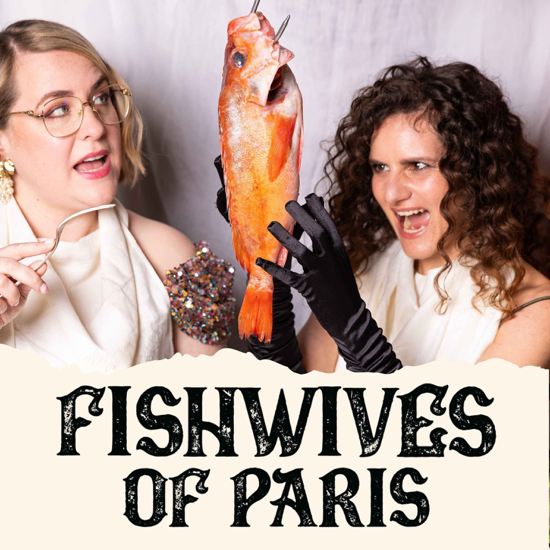
Fishwives of Paris
Hosted on Acast. See acast.com/privacy for more information.
Subscribe
iTunes / Overcast / RSSWebsite
shows.acast.com/fishwivesEpisodes
What Even Is a Bistro?
What actually is a bistro, and why does Paris seem to have a different word for every type of restaurant?
In this episode of Fishwives of Paris, Emily Monaco and Caroline Fazeli break down one of the most misunderstood concepts in French food culture. From cafés to brasseries to bouillons, the lines between these establishments used to be clear, but today, they are anything but. Along the way, they debunk the persistent myth that bistros were invented by Russian soldiers yelling ?bystro,? and instead trace their real origins to waves of migration from the Auvergne into Paris.
The result is a story that has less to do with tablecloths and steak frites, and more to do with community, labor, and the evolution of French comfort food. Follow us on socials for more content on our top bistro picks in Paris.
What You?ll LearnWhat a bistro actually is, and why most people use the word incorrectlyThe difference between a bistro, café, brasserie, bouillon, and restaurantWhy the Russian ?bystro? origin story is a mythHow migration from the Auvergne shaped Parisian food cultureWhat ?bistronomy? is, and how it changed the modern bistroWhy many ?bistros? today are no longer cheap or working-classWhat to look for when choosing a true bistro in ParisFrench Dining, ExplainedBistroSmall, casual, cozyHistorically no reservationsFocus on community and quick serviceNow often a mix of tradition and reinterpretationBrasserieOriginally Alsatian, beer-focusedOpen all day (continuous service)Larger, often more formal settingCan range from beautiful to very averageBouillon19th-century working-class establishmentsEarly ?chain restaurants? in ParisCheap, fast, efficient mealsOften with shared tables and paper tableclothsCaféPrimarily for drinks (coffee, wine)Social and cultural institutionsHistorically key ?third spaces? in ParisRestaurantMore formal diningFixed service times (lunch and dinner)Higher-end than the categories above
How to Spot a Bistro (Visual + Cultural Clues)
While not definitive, classic signs include:
red and white checkered tableclothschalkboard menus with daily specialssmall wine glasseszinc or wooden bartiled floorsclose, convivial seatingBut remember: today, these are aesthetic signals, not guarantees
Watch full episodes in 4k on Youtube
Follow us on Instagram, TikTok, Facebook, and join our Facebook group.
Hosted on Acast. See acast.com/privacy for more information.
Link to episode
Lies, Pastry, and Power: The Real Carême
In this episode of Fishwives of Paris, Emily and Caroline unpack the real story of Marie-Antoine Carême, the ambitious pastry chef who rose to cook for diplomats, emperors, and tsars, and helped shape modern French cuisine.
Beyond the dramatized version, Carême was a master of image and storytelling, even spreading myths about his own life. While he was not a spy, he was deeply connected to power, using food as a tool to impress and influence Europe?s elite.
We explore how Carême?s work helped define French cuisine as we know it today, from early sauce classification to his belief that pastry was a form of architecture. He played a role in shaping iconic desserts like the croquembouche, eclairs, and the modern Charlotte, and helped elevate pastry into an art form built on structure, precision, and spectacle.
The episode also looks at his more modern ideas, including seasonality, balance, and a shift away from heavy spices toward fresh herbs, as well as his role in defining the image of the professional chef, including the creation of the chef?s hat.
In this episode:
Why Carême lied about being an orphanWhat the Apple TV series gets wrongHow he categorized sauces before EscoffierWhy he believed pastry was a form of architectureThe origins of desserts like the croquembouche, eclairs, and CharlotteWhat did Carême actually create and influence?Codifying French cuisine
One of the first to organize recipes at scaleEarly system of ?mother sauces? before Escoffier (Velouté, Espagnole, Béchamel, Allemande)Wrote influential cookbooks and his own carefully curated life storyElevating pastry
Treated pastry as architecture, building elaborate edible structuresCreated dramatic dessert displays using choux, marzipan, and spun sugarHelped bring spectacle into fine diningIconic pastries
Popularized the croquemboucheExpanded the use of choux pastry, including éclairsShaped ladyfingers (biscuits à la cuillère) for dipping and dessertsTransformed the Charlotte into the cold dessert we know todayCreated early versions of vol-au-ventChef identity and kitchens
Invented the chef?s hat (toque)Evolved from pastry chef to full culinary authority (officier de bouche)Helped define the role of the modern chefModern food philosophy
Advocated for seasonality and peak ingredientsFocused on balance and how food makes people feelShifted French cuisine from heavy spices to fresh herbsLuxury and ingredients
Helped introduce chocolate into pastry beyond drinksCooked with luxury ingredients like champagneWorked during the rise of sugar use in FranceDining and presentation
Worked during the shift from display-style dining to coursesCreated grand banquet experiences for political elitesHelped define food as both visual spectacle and social powerWatch full episodes in 4k on Youtube
Follow us on Instagram, TikTok, Facebook, and join our Facebook group.
Hosted on Acast. See acast.com/privacy for more information.
Link to episode
The Great (Fake) Potato Heist
Potatoes are one of the most iconic ingredients in French cuisine today. But for centuries, the French refused to eat them.
In this episode of Fishwives of Paris, Emily Monaco and Caroline Fazeli uncover the strange and fascinating story of how the humble potato went from feared outsider to beloved staple of French cooking. Once thought to cause leprosy and plague, potatoes were even banned in France for a period of time before a determined pharmacist named Antoine-Augustin Parmentier began campaigning to change public opinion.
Through a mix of clever marketing, royal influence, and a staged "potato heist" at Versailles, Parmentier helped transform how the French viewed this Peruvian import. Along the way, Emily and Caroline explore how potatoes traveled from South America to Europe, why the French were so suspicious of them, and how they eventually became the foundation of classic dishes like pommes puree, gratin dauphinois, and hachis Parmentier.
This episode reveals how culinary myths are created, how food traditions evolve, and how one clever campaign helped change the course of French cuisine.
Places Mentioned in This Episode:
Père Lachaise Cemetery (Paris)
This famous Paris cemetery is the final resting place of Antoine-Augustin Parmentier. Visitors sometimes leave potatoes on his grave as a playful tribute to the man who helped introduce them to French cuisine.
Versailles (Chateau de Versailles)
Parmentier famously planted potato fields near Versailles and staged a fake theft of the crop to spark curiosity and convince the public that potatoes were valuable.
Dishes Mentionedpommes puree (buttery mashed potatoes)gratin dauphinoishachis Parmentier (French-style shepherd's pie)French fries (possibly introduced to American diplomats at one of Parmentier's potato banquets)
? Fishwives of Paris
Hosted by Caroline Fazeli and Emily Monaco
? Instagram: @fishwivesofparis
? Goguette affiliates: https://bit.ly/goguette_FWOP
? Press & partnerships: [email protected]
Watch full episodes in 4k on Youtube
Follow us on Instagram, TikTok, Facebook, and join our Facebook group.
Hosted on Acast. See acast.com/privacy for more information.
Link to episode
More Than Street Tacos
Mexican food in France is often treated as cheap street food, but chef Carla Kirsch is challenging that narrative. In this episode of Fishwives of Paris, we sit down with the Mexican-born, French-trained chef behind Alebrije in Lyon to talk about bringing Mexican cuisine into the French fine dining world.
We dig into why French diners expect Mexican food to be inexpensive, why spice still scares people in France, and how many core French ingredients originally came from Mexico and the Americas. Carla also shares what it takes to source Mexican ingredients in France, from dried chilies and tomatillos to masa made from French corn, and what it?s like to open a restaurant in France as a foreign woman.
Places & Institutions Mentioned in This EpisodeAlebrije (Lyon) ? Carla Kirsch?s fine dining Mexican restaurantMilpa (Lyon) ? Carla Kirsch?s more casual taco shopInstitut Paul Bocuse (now Institut Lyfe), Lyon ? where Carla trained in classical French cuisine
? Fishwives of Paris
Hosted by Caroline Fazeli and Emily Monaco
? Instagram: @fishwivesofparis
? Goguette affiliates: https://bit.ly/goguette_FWOP
? Press & partnerships: [email protected]
Watch full episodes in 4k on Youtube
Follow us on Instagram, TikTok, Facebook, and join our Facebook group.
Hosted on Acast. See acast.com/privacy for more information.
Link to episode
My Grandfather Made this Beef Bourguignon in a Barn
Is beef bourguignon really a rustic Burgundian peasant dish? Or is it one of France?s greatest culinary PR successes?
In this episode, Emily Monaco and Caroline Fazeli dig into the surprisingly modern (and non-Burgundian) origins of beef bourguignon, how it became a symbol of ?traditional? French home cooking, and why the version most of us recognize today owes a lot to Parisian restaurants, Escoffier, and Julia Child.
They unpack how French beef has historically been used (working animals first, dinner later), why slow-cooked stews became central to French cuisine, and how the romantic idea of French ?peasant food? often hides a much more complicated and urban reality. Along the way, they break down what actually matters when cooking this dish at home, and which rules are worth ignoring.
In This Episode:Why beef bourguignon is not actually from BurgundyHow a Parisian fast food chain helped shape the dishWhat ?à la bourguignonne? really meansWhy French beef is different from American beefHow Julia Child helped codify the modern version of the recipeCaroline?s no-fuss tips for making beef bourguignon at homeWhat the Fishwives Recommend:
Wine to cook with (for the stew):
You do not need Burgundy wine. ?Bourguignon? refers to a red-wine style of preparation, not the Burgundy region. Use an affordable, drinkable red wine. Do not waste expensive Burgundy on cooking.
Cut of beef to use:
In the U.S.: Chuck (or any hardworking, collagen-rich stew cut)The goal is a tough cut that benefits from long, slow cookingWine to drink with boeuf bourguignon:
Skip Burgundy here, too. The dish is rich and beefy, so it pairs better with a fuller-bodied red:
SyrahCabernet SauvignonNorthern Rhône (like Saint-Joseph)Extra Bits You?ll Hear:Why marinating the beef is optional (and often unnecessary)Why French home cooks don?t obsess over pearl onionsHow this dish reflects how French people actually entertain (low-stress, make-ahead, lots of leftovers)What to do with leftover sauceIf you?ve ever been confused about whether you?re ?doing it wrong? with beef bourguignon, this episode is your permission slip to relax, save your good wine for drinking, and stop taking French food myths so seriously.
Watch full episodes in 4k on Youtube
Follow us on Instagram, TikTok, Facebook, and join our Facebook group.
Hosted on Acast. See acast.com/privacy for more information.
Link to episode
Respect the Crêpe
Crêpes may be one of France?s most iconic foods, but chances are you have been eating them wrong, or at least misunderstanding what they are. In this episode of Fishwives of Paris, Emily and Caroline break down the myths surrounding crêpes, explain why treating them as street food is mostly a tourist habit, and unpack the deep regional identity behind Brittany?s buckwheat galettes.
From linguistic nitpicking (crêpes vs galettes vs krampouezh) to the surprising agricultural history of buckwheat, this episode explores how geography, language, and industrialization shaped one of France?s most misunderstood dishes. In this episode:
Why crêpes are not traditionally street food in their region of originThe difference between sweet wheat crêpes and savory buckwheat galettesBrittany?s cultural independence, from language to infrastructure to foodTruly too many things about buckwheat for one bullet pointCandlemas (La Chandeleur), why France eats crêpes on February 2Where to eat galettes in Paris
We mention Breizh Café as our favorite spot in Paris and Lyon for traditional buckwheat galettes. You will also find many classic crêperies serving plated galettes around the Montparnasse area, historically where trains from Brittany arrived. One important note: traditional galette restaurants serve cider, not wine, in keeping with Breton custom.
Watch full episodes in 4k on Youtube
Follow us on Instagram, TikTok, Facebook, and join our Facebook group.
Hosted on Acast. See acast.com/privacy for more information.
Link to episode
Tartiflette: Humble Beginnings or Brilliant Marketing?
Tartiflette May Look Like an Old-School Dish, But It?s a Marketing Coup in Disguise
The French are masters of après-ski delicacies like cheesy raclette, fondue, and tartiflette ? hearty dishes with loads of melty cheese to help you warm up after a day on the slopes. But while tartiflette may look like a time-tested creation with deep Savoyard roots, the reality is that this casserole of potatoes, bacon, onions, and melted Reblochon cheese is a baby by French food standards, invented in the ?80s by a clever ski resort owner looking to make good on a dairy glut. But this is no simple case of terroir-washing, as Emily and Caroline are here to share.
Tune in to discover:
The story of how tax evasion led to the invention of the stinky, washed-rind marvel known as ReblochonWhy the roots of tartiflette run deeper than you'd thinkHow to recreate this French specialty at home ? even if you can't get your hands on raw milk French cheeseIn this episode we mention Oma cheese from the Von Trapp family in Vermont.
Hosted by Lyon-based sommelier Caroline Fazeli & Paris-based food journalist Emily Monaco.
Follow us on Instagram: @fishwivesofparis
We are currently seeking partnerships. If that?s you, get in touch: [email protected]
Watch full episodes in 4k on Youtube
Follow us on Instagram, TikTok, Facebook, and join our Facebook group.
Hosted on Acast. See acast.com/privacy for more information.
Link to episode
The Secret Lives of French Mushrooms
Mushrooms Are Fun Guys ? As Long as They Don?t Kill Ya
If you see Paris mushrooms on a French menu, don't go assuming they've been grown in the French capital ? these days, about 70% are actually grown in China. Their name is a reference, not to their provenance, but to their roots: Paris mushrooms first gained acclaim in the gardens of the palace of Versailles before their culture moved to the underground caverns of the Catacombs.
In this episode, you?ll learn:
The role French pharmacies play in foraging for mushroomsWhy the French word for mushrooms might make you pauseWhy foraging in France is treated as sacred ? and tightly guardedThe unsuspecting relationship between mushrooms and the catacombs of Paris How the Loire Valley incorporates tourism into mushroom productionWhy French shoppers fiercely prioritize hyper-local produceHow the French prepare mushrooms, including our favorite spot to enjoy them stuffed with snails, garlic, and butterPlaces, people & references mentioned:
La Cave des Roches ? A historic mushroom farm in the Loire Valley that now relies on tourism to survive economically challenging timesBruno Zamblera ? A grower who still cultivates mushrooms underground, continuing a nearly lost traditionCafé de Musée ? Where Escargots à la Bourguignonne are reimagined using mushroom caps instead of snails (Emily?s favorite)Mushroom dishes & recipes discussed:
Duxelles ? Finely chopped mushrooms cooked down with shallots and herbsSauce à la Forestière ? A classic mushroom-forward French sauceThis episode is a journey through tunnels, traditions, and taboos ? revealing how something as humble as a mushroom can tell the story of Paris, French food culture, and what it means to eat locally in a globalized world.
Hosted by Lyon-based sommelier Caroline Fazeli & Paris-based food journalist Emily Monaco.
Follow us on Instagram: @fishwivesofparis
We are currently seeking partnerships. If that?s you, get in touch: [email protected]
Watch full episodes in 4k on Youtube
Follow us on Instagram, TikTok, Facebook, and join our Facebook group.
Hosted on Acast. See acast.com/privacy for more information.
Link to episode
Lowkey, Christmas is Pagan AF
The Bûche de Noël and French Christmas Episode
It?s no surprise, in structure-loving France, that the menu for Christmas dinner is pretty much set in stone ? or should we say, petrified in wood? After a veritable eating frenzy of oysters, foie gras, roasted capon, and more truffle-studded cheese than any accountant (or cardiologist) would recommend, on December 24th, most French people feast on a cake shaped into a log, complete with meringue mushrooms and chocolate bark. And before you go trying to link the Yule log to a manger, know that the bûche de Noël has got nothing to do with the birth of Jesus.
Tune in to discover:
How and why France co-opted a pagan tradition to turn it into a pastry marvelWhy we have the English to thank for making bûche de Noël an approachable home bakeJust some of the most out-there bûches on offer from celebrity pastry chefsWhy most French people deviate from tradition with a newer version of a bûche that?s easier, cheaper, and a whole lot lighterCheck out our Instagram to see photos of Caroline's Caga Tio creation from the episode @fishwivesofparis
We collaborated with Lucy Vanel of PLUM Lyon for a gorgeous meringue mushroom recipe which you can find on our episode webpage: https://www.fishwivesofparis.com/episodes/s1/the-buche-de-noel-episode/
Hosted by Lyon-based sommelier Caroline Fazeli & Paris-based food journalist Emily Monaco.
Follow us on Instagram: @fishwivesofparis
We are currently seeking partnerships. If that?s you, get in touch: [email protected]
We are now proud partners of Goget
Watch full episodes in 4k on Youtube
Follow us on Instagram, TikTok, Facebook, and join our Facebook group.
Hosted on Acast. See acast.com/privacy for more information.
Link to episode
Sh*tting All Over Champagne
The Episode Where we Party Poop on Champagne
Dom Pérignon?s French Wikipedia page claims he invented Champagne ? but the truth is way cooler than that. The world?s best-known sparkling wine has roots in English cider-making and has a host of intrepid local widows to thank for its deliciousness, not to mention its renown.
Tune in to learn:
How Champagne accidentally became one of the most lauded wines in the worldWhich glassware to choose and whyWhat the heck Dom Pérignon actually did to give him such a reputationHosted by Lyon-based sommelier Caroline Fazeli & Paris-based food journalist Emily Monaco.
Follow us on Instagram: @fishwivesofparis
We are currently seeking partnerships. If that?s you, get in touch: [email protected]
Watch full episodes in 4k on Youtube
Follow us on Instagram, TikTok, Facebook, and join our Facebook group.
Hosted on Acast. See acast.com/privacy for more information.
Link to episode
Bread is Life
Watch full episodes in 4k on Youtube
Follow us on Instagram, TikTok, Facebook, and join our Facebook group.
Hosted on Acast. See acast.com/privacy for more information.
Link to episode
Hot Air Balloons & Regret: Beaujolais Nouveau Has Arrived
Every third Thursday of November, French bartenders across the hexagon pull millions of corks, unleashing aromas of banana Runts and regret: it?s time for Beaujolais Nouveau, a wine whose release date is literally written into law, and whose marketing has included everything from Japanese Beaujolais baths to hot-air-balloon deliveries.
Beaujolais Nouveau has a surprisingly deep history, rooted in the 14th-century banishment of the Gamay grape from bougier Burgundy. Once dismissed as a gimmick, this glou-glou (gluggable) red has evolved and Caroline and Emily are here to defend its honor.
?? Tune in to learn:
? The story of the man who made Beaujolais Nouveau a 1970s global phenomenon
? The winemaking technique that makes Beaujolais uniquely drinkable young
? Why you might be wrong about not aging Beaujolais Nouveau
? And whether pairing it with Thanksgiving dinner is genius? or just a marketing myth
? Fishwives of Paris ? where French food myths go to die.
Hosted by Lyon-based sommelier Caroline Fazeli and Paris-based food journalist Emily Monaco.
Follow us on Instagram: @fishwivesofparis
We are now proud Goguette affiliates.
?Want to partner with us? We?d love to talk to you about press and sponsorship opportunities here: [email protected]
Watch full episodes in 4k on Youtube
Follow us on Instagram, TikTok, Facebook, and join our Facebook group.
Hosted on Acast. See acast.com/privacy for more information.
Link to episode
Satan?s Beverage & Toasted Colonialism: A Tale of French Breakfast
Forget bacon and eggs, in France, breakfast doesn?t even come on a plate. ???
Instead, it?s all about the bowl, a ritual shaped by global trade, 17th-century aristocrats, and a serious caffeine habit.
Tune in to learn:
Why the French word for lunch, déjeuner, actually means breakfastThe FWOP's take on bacon and brunch in FranceHow three caffeinated plants from three corners of the world: coffee, tea, and chocolate changed French mornings foreverWhat French people actually eat for breakfast (spoiler: it?s not croissants ?)Plus: Caroline and Emily spill their favorite breakfast spots in Paris (5 Pailles) and Lyon (Odessa and Le Déjeuneur).
? Fishwives of Paris ? where French food myths go to die (and breakfast gets a reality check).
Hosted by Lyon-based sommelier Caroline Fazeli & Paris-based food journalist Emily Monaco.
Follow us on Instagram: @fishwivesofparis
We are currently seeking partnerships. If that?s you, get in touch: [email protected]
Watch full episodes in 4k on Youtube
Follow us on Instagram, TikTok, Facebook, and join our Facebook group.
Hosted on Acast. See acast.com/privacy for more information.
Link to episode
Red Tape & Red Wine: Yves Cuilleron Builds an AOC
Episode 3: How Do You Build an AOC? Featuring Guest Yves Cuilleron
Is there anything Frencher than wrapping our wine in a bundle of bureaucratic red tape?
If you?ve ever seen a meme about ?sparkling boyfriends? or ?sparkling anxiety,? you?ve already brushed up against France?s infamous wine labeling system: AOC (Appellation d?Origine Contrôlée) and its modern twin AOP (Appellation d?Origine Protégée).
In short, these are France?s quality seals, the rulebooks that tell you exactly where a wine comes from and how it?s made. They cover everything from grape varieties to vineyard size to how high the vines can grow. It?s also the way the French usually talk about wine, asking for a Bordeaux or a Sancerre, rather than a Pinot Noir or Chardonnay like we tend to do in the U.S.
There are currently 363 French wines with AOC/AOP status, from Champagne to Saint-Émilion, and the Rhône is about to welcome lucky number 364: AOC Vins de Vienne.
To walk us through how you actually build an appellation from scratch, we?re joined by legendary winemaker Yves Cuilleron, who has been at the forefront of reviving forgotten vineyards in the Northern Rhône.
Tune in to learn:
Why these hillside vineyards are back-breaking to farm and why the results are worth itHow the region lost its historic name, Seyssuel (no, not because it looks like ?sexual?)How Yves helped rescue Condrieu from extinction, cementing his status as one of Caroline?s wine heroesHosted by Lyon-based sommelier Caroline Fazeli & Paris-based food journalist Emily Monaco.
Follow us on Instagram: @realfishwivesofparis
Partnerships & inquiries: [email protected]
Watch full episodes in 4k on Youtube
Follow us on Instagram, TikTok, Facebook, and join our Facebook group.
Hosted on Acast. See acast.com/privacy for more information.
Link to episode
The Higher the Stank, the Closer to God
What do a runaway priest, a Norman maiden, and a stinky wheel of cheese have in common? According to legend: the birth of Camembert, France?s most infamous fromage. But is that story fact or just a little too? cheesy?
In this episode, Emily and Caroline dig into the rind wars, the myths, and the funk:
How Camembert, Brie, and other bloomy cheeses got their snowy white coatsThe cheese faux pas that?ll get you permanently uninvited from Caroline?s dinner partiesWhy so much Camembert is bad (and how to spot the real deal)Nicknamed ?God?s Feet? for its aroma, Camembert isn?t just a cheese ? it?s a cultural battlefield. We?re here to slice through the myths and tell you what?s really on the plate.
Hosted by Lyon-based sommelier Caroline Fazeli & Paris-based food journalist Emily Monaco.
Follow us on Instagram ? @realfishwivesofparis
Interested in partnerships? Let?s talk: [email protected]
Watch full episodes in 4k on Youtube
Follow us on Instagram, TikTok, Facebook, and join our Facebook group.
Hosted on Acast. See acast.com/privacy for more information.
Link to episode
Is there a Baguette in Your Pants?
Is the baguette really French? (Spoiler: only kinda). France?s most famous loaf isn?t as French as you think. In this episode, Emily and Caroline dig into the absurd myths and surprising truths of the baguette?s history, from Napoleon?s army to Viennese bakers, all the way to why the ?traditional? baguette was only invented in 1993, making it younger than most millennials.
Tune in to learn:
Why most baguettes in France are industrial (and not worth the carbs).How to spot a truly great loaf (sexy baguette ASMR included)Baguette etiquette tips for your next trip to France.The ?good? baguette we devour on-screen is from Les Artistes; if you?re in Lyon, give them a try and tell them we sent you!
Hosted by Lyon-based sommelier Caroline Fazeli & Paris-based food journalist Emily Monaco.
Follow us on Instagram: @realfishwivesofparis
Buy our Guide to Paris: https://cart.winedinecaroline.com/fishwives-guide-to-paris
We are currently seeking partnerships. If that?s you, get in touch: [email protected]
Watch full episodes in 4k on Youtube
Follow us on Instagram, TikTok, Facebook, and join our Facebook group.
Hosted on Acast. See acast.com/privacy for more information.
Link to episode
Introducing The Real Fishwives of Paris
The Real Fishwives of Paris is the French food and wine podcast that flips the table on tradition. Hosted by Lyon-based sommelier Caroline Fazeli and Parisian food journalist Emily Monaco, we bust myths, explore culinary history, and tell the untold stories of French cuisine and wine culture.
?? Launches September 15th!
? Learn about French food traditions, wine education, Paris food culture, Lyon gastronomy, and the real stories behind baguettes, Bordeaux, and beyond.
Whether you?re a Francophile, foodie, wine lover, or just obsessed with France, this is your go-to podcast for bold storytelling and delicious controversy.
Subscribe for behind-the-scenes looks at French food, interviews with chefs and sommeliers, French wine deep-dives, and culinary myths debunked ? all with a dash of humor and a whole lot of heart.
Watch full episodes in 4k on Youtube
Follow us on Instagram, TikTok, Facebook, and join our Facebook group.
Hosted on Acast. See acast.com/privacy for more information.
Link to episode